
Last updated September 25, 2026
ADU Warning Signs: A Rialto Homeowner’s Reference Guide
A Rialto homeowner whose ADU project has no permit number assigned after 45 days of city submittal is not “in process” - they are in a correction cycle their contractor has not disclosed, and the clock toward a lapsed application has already started. Since 2015, we’ve reviewed over 900 ADU projects across Southern California, and the ones that fail share a pattern: the warning signs appear in documents, not drama. This guide maps those signs by project phase, with specific Rialto permit portal steps, dollar thresholds, and document checks you can perform today, and points to The Complete Guide to ADU in Rialto for deeper context.
Quick Answer
The most dangerous ADU warning signs in Rialto are documentary, not interpersonal: a construction quote issued before permit drawings are complete, a permit status stuck in “correction issued” beyond 30 days without a written response plan, missing lien releases at each payment milestone, and a certificate of occupancy that never gets recorded with San Bernardino County. Each of these has a specific fix, and each becomes harder to fix the longer it goes unaddressed.
Table of Contents
- Pre-Permit Warning Signs: When the Quote Arrives Before the Drawings
- Permit Phase Warnings: Reading Rialto’s Permit Portal Correctly
- Construction Phase Document Warnings: Lien Releases, Change Orders, and Photo Records
- Inspection Failure Patterns: The Three Rialto ADU Inspections Most Often Failed
- Post-Construction Warning Signs: The Missing Certificate of Occupancy
- Cost Red Flags: Pricing That Shifts With the Wind
- Common Mistakes to Avoid
- When to Call a Professional
- Frequently Asked Questions
- The Bottom Line
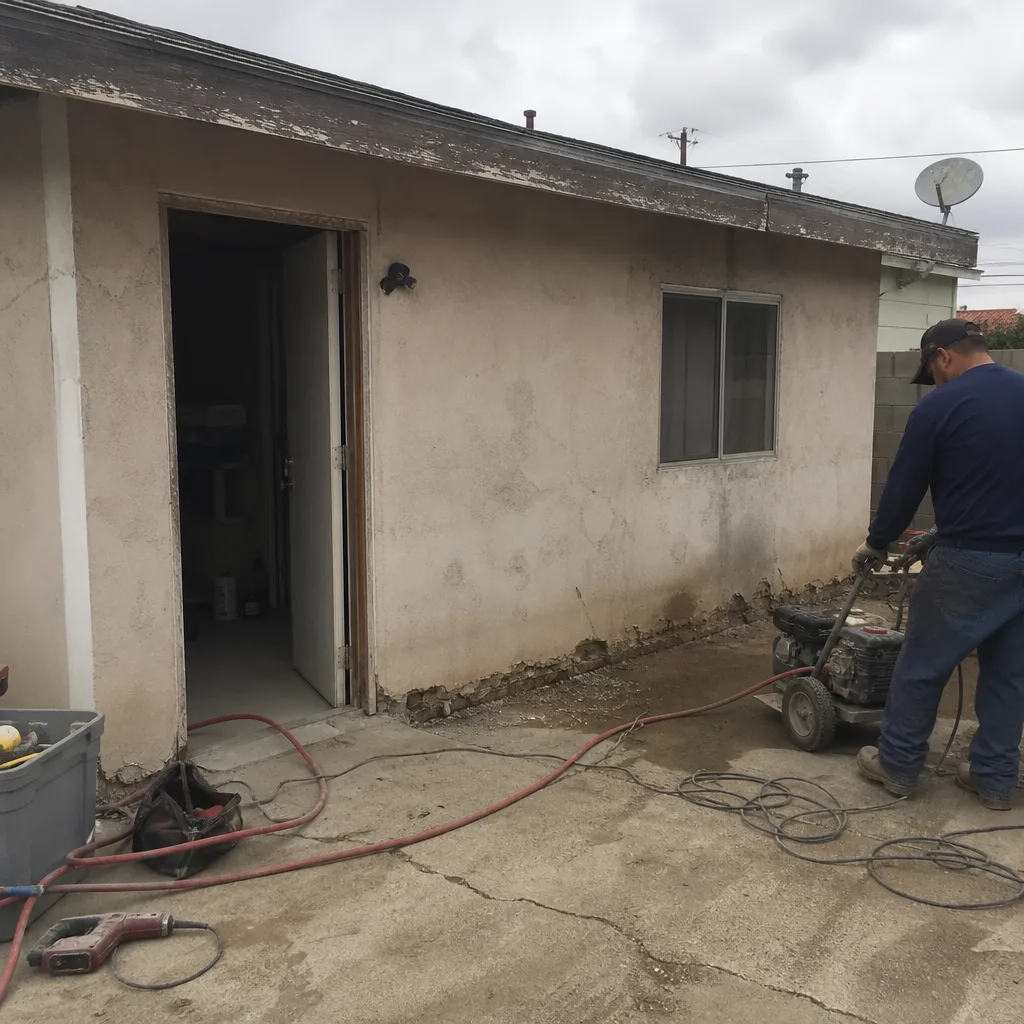 Before
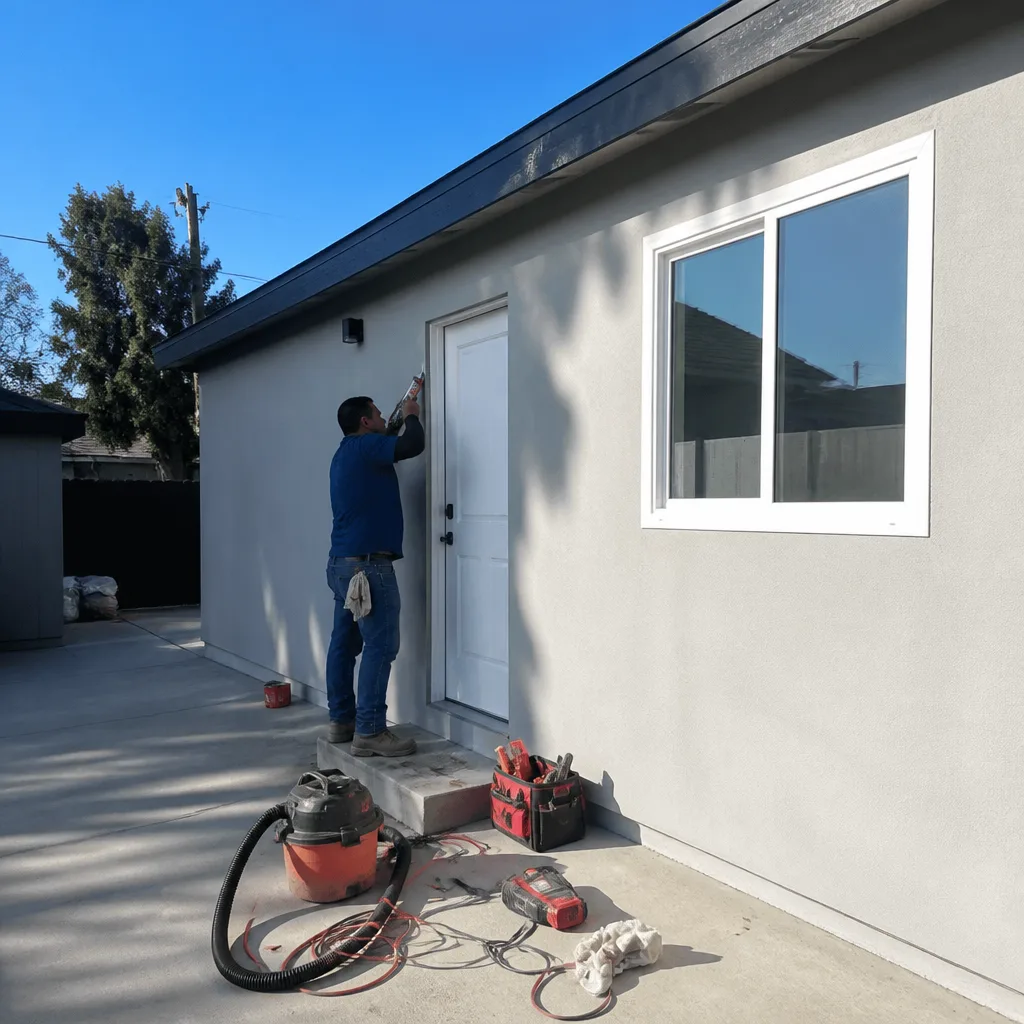 After
AfterPre-Permit Warning Signs: When the Quote Arrives Before the Drawings
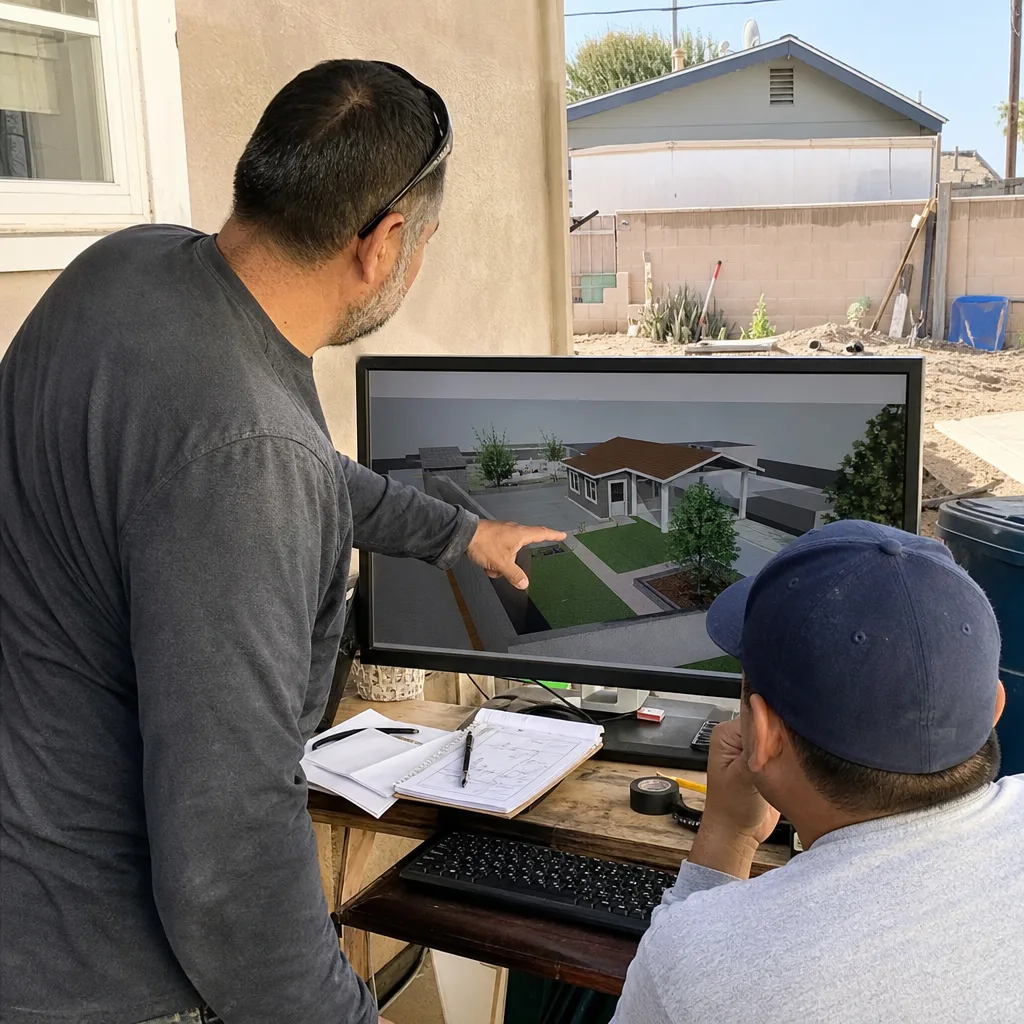
The most expensive mistake in Rialto ADU construction starts with a number that looks precise but isn’t. A contractor who quotes $85,000 for a garage conversion before a surveyor has measured your slab, before the city has confirmed your setback, and before a structural engineer has signed off on your existing foundation - a scenario explored in our DIY vs Professional ADU: The Rialto Homeowner’s Decision Guide - is not giving you a price. They’re giving you an anchor.
Here’s what happens next, in our experience: the permit set reveals that your 1970s Rialto garage slab is 3.5 inches thick, not the 4 inches assumed in the quote. The foundation line item jumps $4,000-$7,000. Or the fire separation between the ADU and the main house requires a 1-hour rated assembly the contractor didn’t price. Or the San Bernardino County flood zone designation triggers additional venting requirements. Each correction becomes a “change order,” and the homeowner, three months in, has no leverage to push back.
The Haven Standard, Clause 1, requires a written price before work starts - but that price must be tied to a completed permit set, not a sketch. At ADU Design & Permitting in Rialto, we complete the drawings, engineering, and city pre-submittal review before the construction contract is signed. The price you receive is scoped to what the city will actually approve.
Specific pre-permit red flags to watch for:
- A quote with line items like “foundation: TBD” or “electrical: allowance” - these are not line items, they’re blanks the contractor will fill later
- No mention of Rialto’s specific ADU ordinance amendments, including the 2023 updates to parking waiver rules for conversions within a half-mile of transit
- A “design fee” that is separate from the construction contract, with no clarity on who owns the drawings if you walk away
- No site visit with a measuring laser and photo documentation - if they’re pricing from Google Street View, they’re guessing
- A timeline that shows construction starting before permit approval, with language like “we’ll pull permits as we go”
In Rialto’s North Rialto and South Rialto neighborhoods, we’ve seen repeated issues with older garage slabs poured without reinforcement. A contractor who quotes without a core test or at minimum a hammer survey is pricing optimism, not reality. The fix is simple: demand the permit set precede the construction quote, and demand that both live under a single contract with a single written price.
Permit Phase Warnings: Reading Rialto’s Permit Portal Correctly
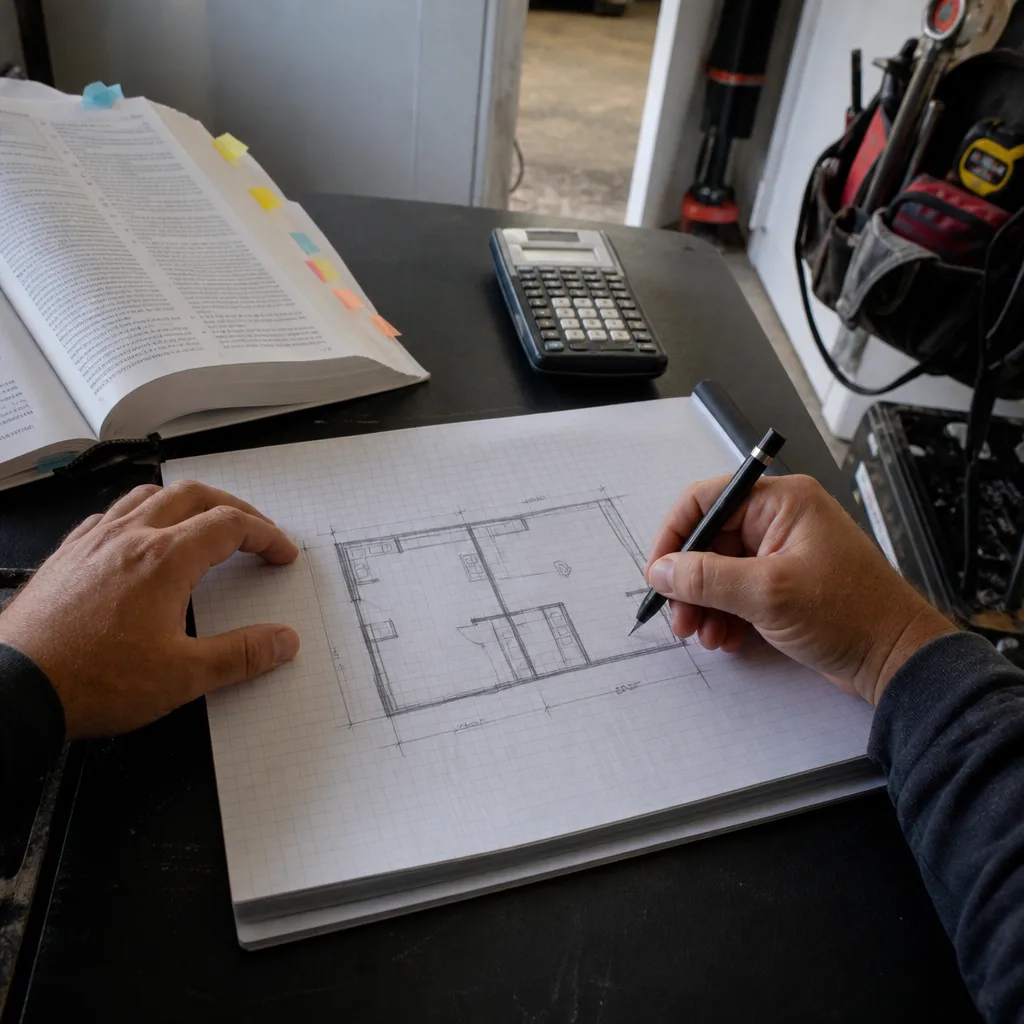
Rialto uses the Ellery ADU Studio Rialto home region’s standard permitting platform, and every homeowner should know how to check their own application status. The URL is public; you do not need your contractor’s login. What you see there matters more than what your contractor tells you.
After submittal, a Rialto ADU permit application passes through distinct status stages. The danger zone is “correction issued” - this means the plan checker has returned the set with required changes, and the clock is running. Rialto allows 180 days from the date of correction issuance for a resubmittal. After that, the application lapses, and you restart with new fees and a new queue position.
Here is how to check your own status:
- Navigate to the Rialto permit portal and select “Search Permits”
- Enter your address or the application number your contractor provided
- Review the “Status” field: “In Review” means active plan checking; “Correction Issued” means a response is required; “Approved” means the permit is ready to issue upon fee payment
- Click “View Documents” to see the actual correction letter - it will list specific code sections, not vague notes
- Note the “Correction Due Date” - this is the 180-day deadline, not a suggestion
A contractor who tells you “the city is just backed up” when the portal shows “correction issued” is either uninformed or misrepresenting the situation. In either case, you need the correction letter in your hands, and you need a written response plan with dates.
Rialto’s plan checkers are thorough on ADU fire separation and egress requirements, reflecting California’s updated building standards. A common correction we see: the bedroom egress window specification doesn’t meet the current minimum opening area (5.7 square feet clear, 20 inches minimum clear width, 24 inches minimum clear height, with a maximum sill height of 44 inches above the finished floor). A contractor who submitted drawings without verifying these dimensions against the actual window schedule is not detail-oriented enough for ADU work.
Another Rialto-specific pattern: properties in the older neighborhoods near Foothill Boulevard often have unpermitted additions from the 1980s and 1990s. The ADU permit triggers a full property review, and those unpermitted structures must be addressed. A contractor who didn’t flag this in pre-permit due diligence has either missed it or is hoping the city does too. The city won’t.
Construction Phase Document Warnings: Lien Releases, Change Orders, and Photo Records
California mechanics lien law gives subcontractors and material suppliers 90 days from completion of work to file a lien on your property. The only protection against this is a valid, timely lien release from every party who has a right to file. If your contractor is not providing these at each payment milestone, you are building without a financial safety net.
A valid California conditional lien release must include: the property address, the claimant’s name and signature, a description of the work performed, the amount paid, and the through-date of the release. An “invoice marked paid” is not a lien release. A contractor’s verbal assurance that “everyone’s been paid” is not a lien release. The document exists, or the protection does not.
At Ellery ADU Studio, every project governed by The Haven Standard includes a documented photo record on every visit - clients receive evidence of what was found and what was done, not a summary of how it felt. Under Clause 5 (No Surprises), the scope is locked at signing; no door-side upsells, no scope creep. If a condition requires change, the homeowner receives a written amendment with cost and schedule impact before any additional work proceeds.
Warning signs during construction:
- Payment requests that arrive without corresponding lien releases from the previous period
- Change orders presented as verbal descriptions or text messages, not written amendments with signature lines
- No photo documentation of conditions found - water intrusion, termite damage, substandard existing framing - that justify additional work
- A request for “final payment” before the final inspection is scheduled or passed
- Subcontractors or material suppliers contacting you directly about unpaid bills
For Garage Conversion ADU in Rialto projects, the payment schedule should align with inspection milestones: foundation/rough framing inspection, rough mechanical/electrical/plumbing inspection, insulation inspection, and final inspection. Each milestone passed should trigger a payment and corresponding lien releases. A contractor who wants 50% upfront and 50% at completion is asking you to carry their cash flow risk.
In Rialto’s climate, with summer temperatures regularly exceeding 95°F, material storage and curing conditions matter. A photo record should show proper hydration of concrete pours, shaded storage of adhesives and sealants, and moisture barriers in place before insulation. If your contractor’s “documentation” is a few phone snapshots with no context, you don’t have a record; you have a gesture.
Inspection Failure Patterns: The Three Rialto ADU Inspections Most Often Failed
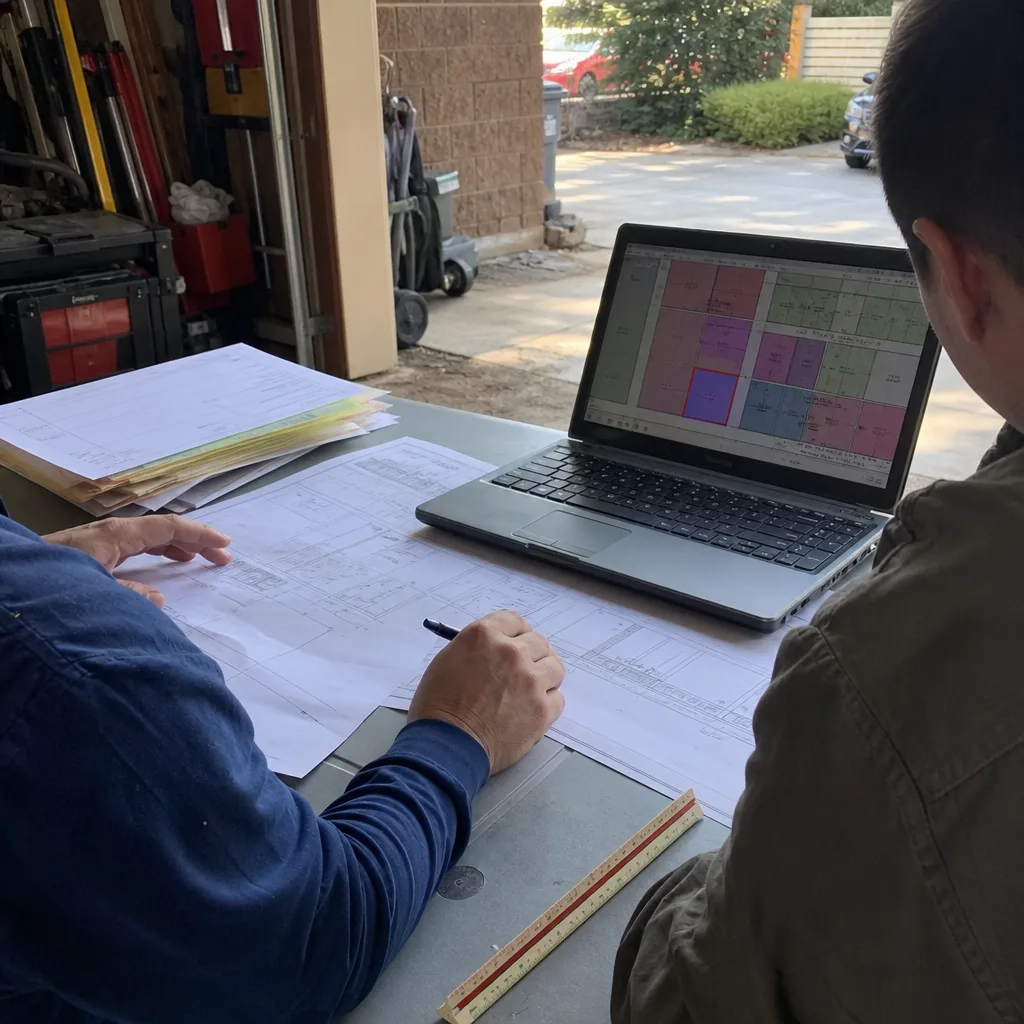
ADU inspections in Rialto follow the standard California building code sequence, but three inspections fail disproportionately often on projects we’ve reviewed: the rough electrical inspection, the insulation/energy compliance inspection, and the final fire separation inspection. Understanding why each fails helps you spot a contractor who is reacting rather than preparing.
Rough Electrical Inspection
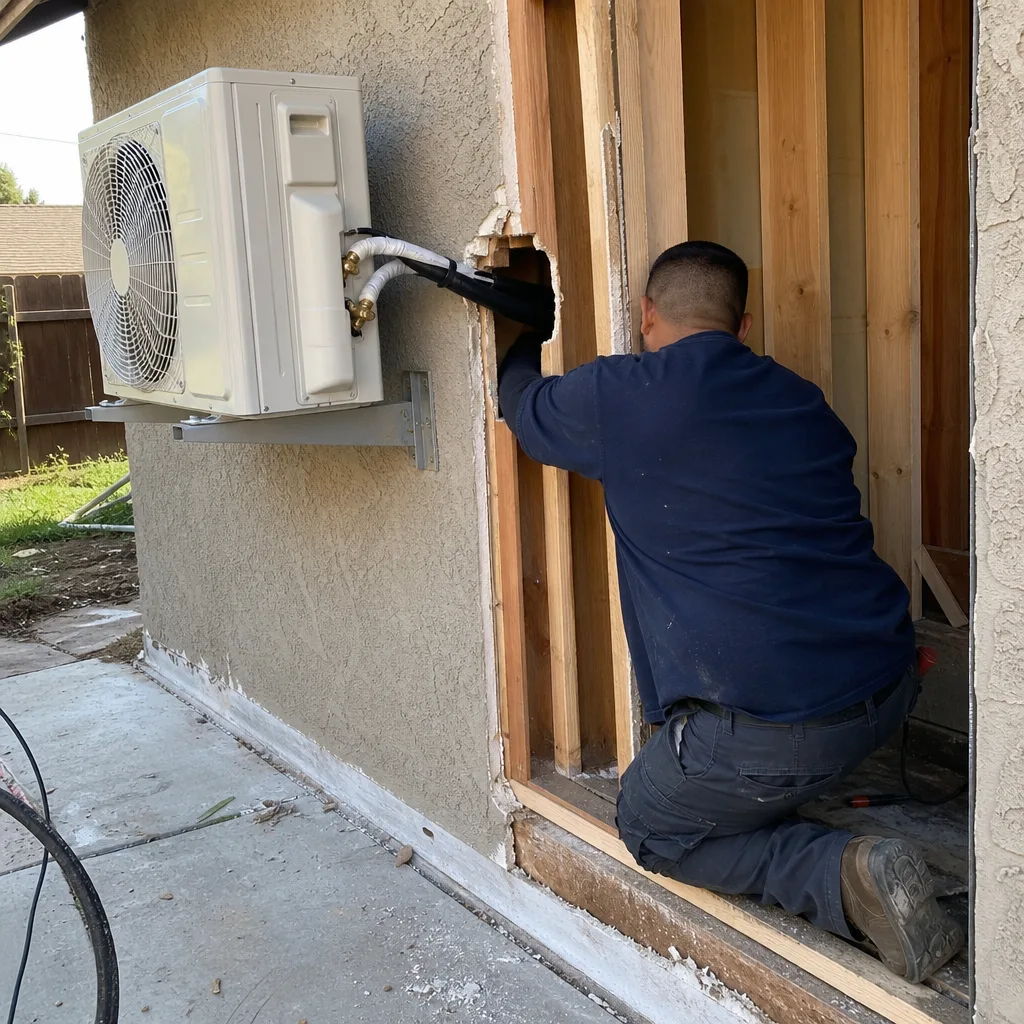
The most common failure: AFCI (Arc-Fault Circuit Interrupter) protection not installed on required circuits, or installed on circuits that also require GFCI protection without proper coordination. In Rialto, as throughout California, ADUs require AFCI protection on virtually all 120-volt circuits, with specific exceptions for dedicated appliances. A contractor who treats this as “just like the main house” often misses that the ADU’s smaller panel configuration changes the available breaker types.
Another frequent issue: the service panel upgrade, often required for garage conversions where the existing main panel lacks capacity. The rough electrical inspection includes verification that the new subpanel or service upgrade matches the approved electrical plan, including busbar ratings and grounding electrode conductor sizing. We’ve seen contractors install a 100-amp subpanel where the plan specified 125-amp, hoping the inspector won’t check the label. The inspector always checks the label.
Insulation and Energy Compliance Inspection
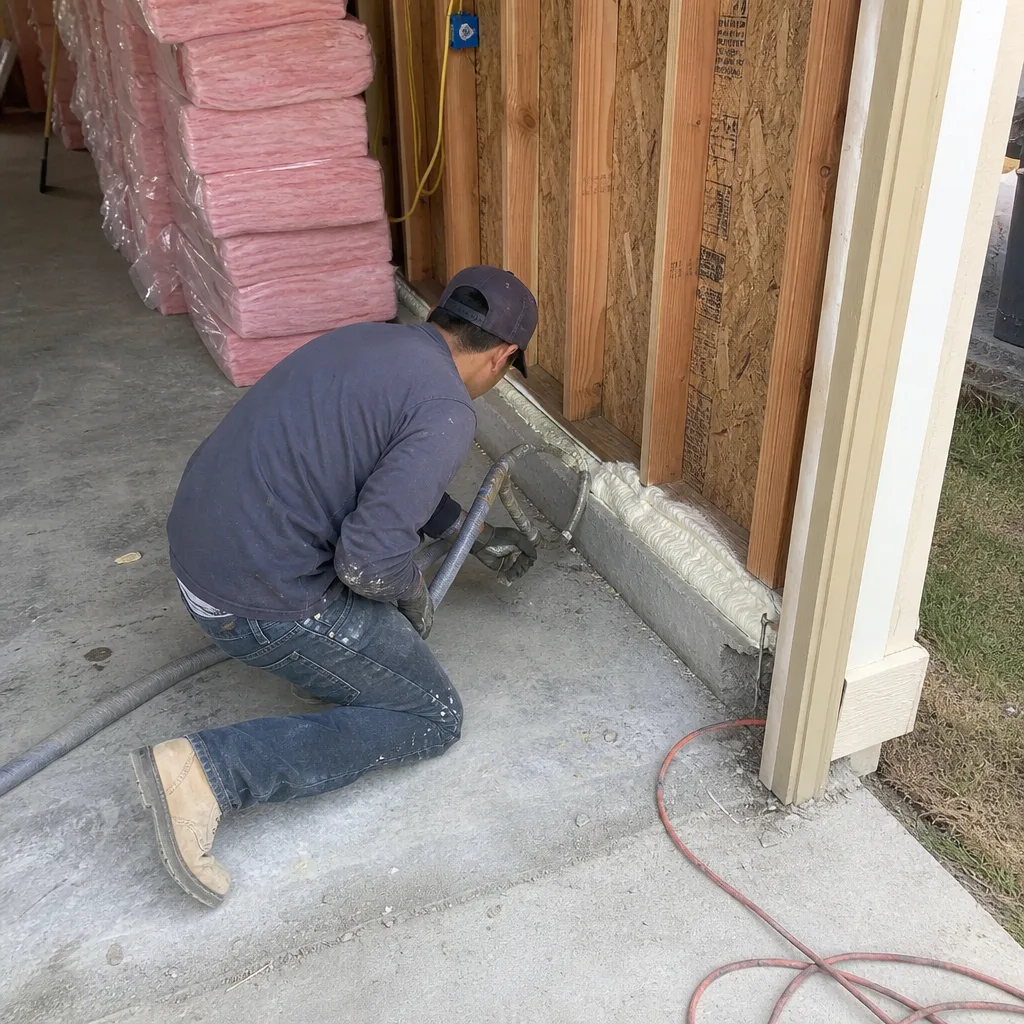
Rialto falls in California Climate Zone 10, with specific Title 24 requirements for insulation R-values and whole-building energy performance. The inspection verifies not just that insulation is present, but that it matches the HERS (Home Energy Rating System) rater’s documentation. Common failures: compression of batt insulation behind pipes or wiring, gaps at rim joists, or the use of non-compliant rigid foam in assemblies requiring specific fire ratings.
For New Detached ADU in Rialto projects, the energy compliance path matters. Prescriptive compliance is stricter but simpler to document; performance compliance requires modeling but allows trade-offs. A contractor who doesn’t know which path your project is on, or who can’t produce the CF-1R and CF-2R forms the inspector will request, has not prepared for this inspection.
Final Fire Separation Inspection
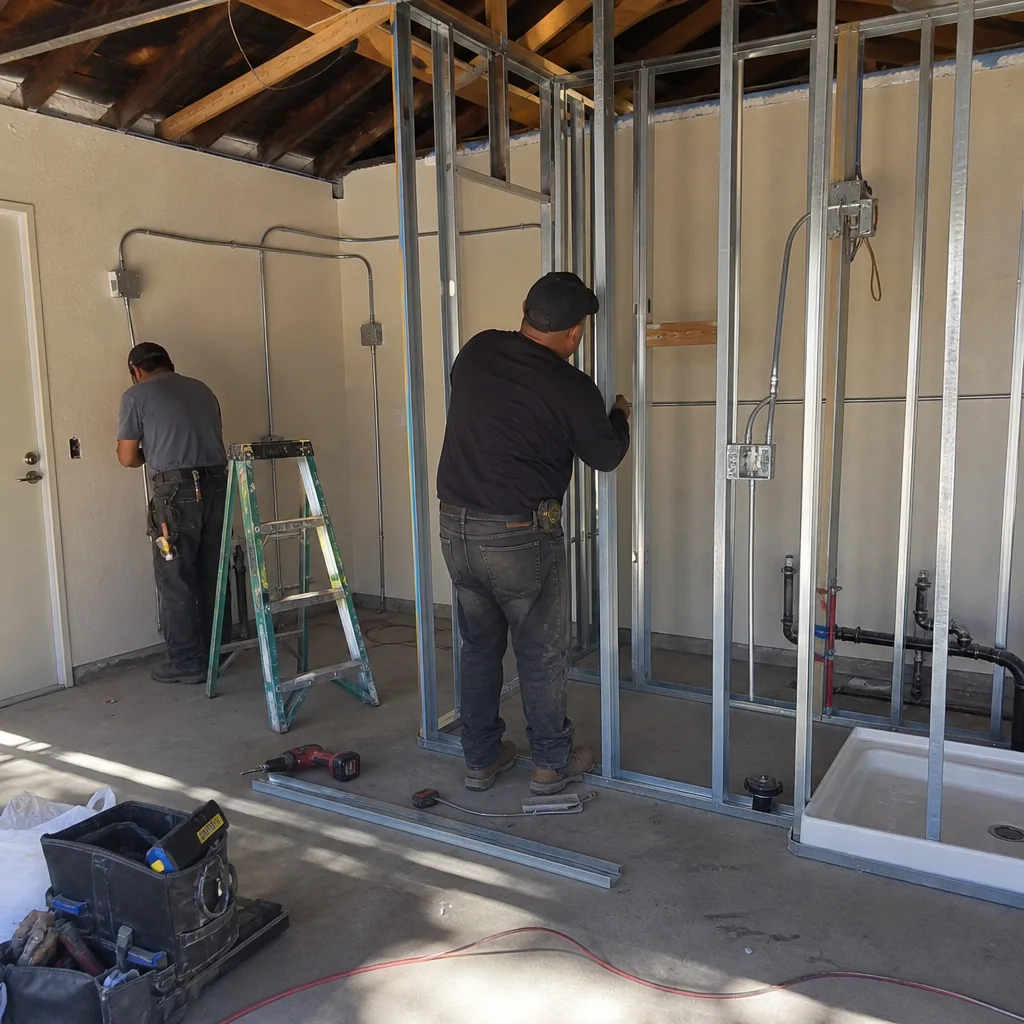
This inspection applies primarily to attached ADUs and garage conversions, where the ADU must be separated from the main dwelling by a 1-hour fire-resistive assembly. The inspector verifies the assembly as built matches the approved plan: specific gypsum board type and thickness, proper taping and sealing, fire-rated door assemblies with self-closing hinges, and penetration sealing for any utilities passing through.
The warning sign: a contractor who tells you to “just call for re-inspection” without explaining the specific correction required, the revised materials needed, and the timeline for implementation. Re-inspection without correction is a waste of your time and the city’s; re-inspection fees in Rialto are not trivial, and multiple failures can trigger a requirement for revised plans.
What you should demand: a written correction notice with the inspector’s specific code citations, a written plan from your contractor addressing each citation with materials and methods, and a photo record of the correction before the re-inspection is scheduled. This is standard practice under The Haven Standard; it should be standard practice for any Rialto ADU project.
Post-Construction Warning Signs: The Missing Certificate of Occupancy
An ADU without a recorded Certificate of Occupancy (CO) cannot legally be rented in Rialto. This is not a technicality; it is enforced by the city’s code compliance division and flagged by title companies at sale. Yet we regularly encounter homeowners who completed construction months or years ago without ever receiving, or requesting, this document.
The CO is issued after final inspection passage and verification that all permit conditions have been met. In Rialto, the process requires: final inspection approval by all disciplines (building, electrical, plumbing, mechanical), resolution of any outstanding corrections, payment of all permit fees, and submission of any required HERS verification documentation. The city then issues the CO, which must be recorded with San Bernardino County to appear on the property’s official record.
How to check your own status:
- Contact Rialto Building & Safety with your permit number and request the final inspection status
- If final inspection passed, request a copy of the CO and verify it has been recorded - the city can confirm, or you can check San Bernardino County Assessor records online
- If the CO is not recorded, request the recording documentation and follow up with the county recorder
- If no CO was issued, determine which inspection or documentation is outstanding - this may require reopening a permit that has gone stale
A contractor who completed work without ensuring CO issuance has left you with an unpermitted structure. In Rialto’s rental market, where ADU rents range from $1,400 for a studio junior ADU to $2,400 for a two-bedroom detached unit, operating without a CO exposes you to code enforcement action, inability to evict through standard unlawful detainer processes, and potential insurance denial if a claim arises.
Title companies flag unpermitted ADUs during sale transactions. The typical resolution requires either retroactive permitting - often impossible if the work doesn’t meet current code - or removal. The cost of either far exceeds the cost of proper permitting at the outset. For homeowners in Rialto neighborhoods like Las Colinas or the areas near Rialto Airport, where property values have appreciated significantly since 2015, this discrepancy can derail a sale or force a price reduction that dwarfs the original construction cost.
Cost Red Flags: Pricing That Shifts With the Wind
ADU pricing in Rialto follows regional patterns with local variation. As of 2024-2025, realistic all-in ranges for completed, permitted, inspected ADUs in the Rialto market are:
- Garage conversion ADU: $85,000-$140,000 (drawings through final inspection)
- New detached ADU, studio/1-bedroom: $180,000-$280,000
- New detached ADU, 2-bedroom: $250,000-$380,000
- Junior ADU/interior conversion: $45,000-$85,000
- Site prep and utilities (if not included above): $15,000-$45,000 depending on sewer lateral distance, electrical service capacity, and grading requirements
These ranges assume standard finishes, compliant with Rialto’s adopted codes, with no extraordinary site conditions. A quote significantly below these ranges - a $55,000 garage conversion, a $120,000 detached ADU - is not a bargain. It is a scope that will expand, or a contractor who will disappear, or both.
Conversely, a quote significantly above these ranges without specific justification - “this neighborhood requires extra…” without citing a specific code section or site condition - is padding. The justification should be written, specific, and tied to a document: a soils report, a geotechnical recommendation, a city pre-application letter.
At Ellery ADU Studio, every project is quoted with a written price before any work begins, per Haven Standard Clause 1. The price includes the permit set, the construction, and the inspections. It does not include “allowances” that shift risk to the homeowner. If a condition is unknown, we investigate it before quoting - core tests, exploratory demolition, utility mark-outs - so the price reflects reality.
For prefab and modular ADU systems, including Abodu, Cover, and Dvele units we’ve specified and coordinated, the pricing model differs but the principle holds: the factory price is fixed, but site prep, foundation, utility connections, and finish work must be quoted specifically for your Rialto property. A “turnkey” quote that doesn’t itemize these site-specific costs is not turnkey; it’s incomplete.
Common Mistakes to Avoid
- Starting construction before permit approval. In Rialto, this triggers stop-work orders, doubled permit fees, and potential demolition requirements. The 2019-2023 ADU law expansions did not legalize build-first-permit-later.
- Accepting a “verbal” or “handshake” contract for a six-figure project. California requires home improvement contracts over $500 to be in writing, with specific disclosures. A contractor who resists this is either ignorant of the law or evading it.
- Failing to verify the contractor’s license status at cslb.ca.gov. Check that the license is active, that “ADU” or “B-General Building” is within the classification, and that workers’ compensation insurance is current if the contractor has employees.
- Ignoring Rialto’s specific setback and height restrictions for detached ADUs. The city allows 4-foot side and rear setbacks for ADUs under 800 square feet, but this varies by zone and general plan designation. A contractor who doesn’t verify your specific zone is guessing.
- Not requiring photo documentation of existing conditions before work starts. Without dated photos of your slab, foundation, and existing utilities, you have no baseline to dispute change orders that blame “unforeseen conditions.”
- Paying the final installment before CO issuance and recording. Your leverage disappears with your money. Structure payments to retain sufficient holdback until legal occupancy is confirmed.
- Assuming prefab ADUs bypass permitting. Factory-built units from Abodu, Cover, Dvele, or other manufacturers still require Rialto building permits, foundation plans, utility connections, and inspections. The factory certification is not the CO.
When to Call a Professional
Call a design-build professional - see How to Hire a ADU Contractor in Rialto: A Step-by-Step Guide - when your permit status has been “correction issued” for more than 30 days without a written response plan, when your contractor has provided no lien releases after two or more payments, when an inspection has failed twice on the same item, or when you cannot locate your Certificate of Occupancy six months after construction completion. These are not minor delays; they are structural problems that compound with time.
Ellery ADU Studio Rialto offers free estimates in Rialto - call (951) 476-1467. We also provide a Free Second Opinion on any written estimate already in hand, with specific attention to permit completeness, pricing realism, and risk allocation. A live person answers calls 24/7; no voicemail queue, no callback promise that doesn’t materialize.
Frequently Asked Questions
Garage conversion ADUs in Rialto typically run $85,000-$140,000 all-in, drawings through final inspection, while new detached units range from $180,000 for a studio to $380,000 for a two-bedroom. Every project Ellery ADU Studio quotes receives a written price before work starts, per Haven Standard Clause 1 - no allowances, no “call for pricing.” Call (951) 476-1467 for an exact quote on your specific property; estimates are free.
Search the Rialto permit portal using your address or application number, then check the “Status” field: “Approved” means ready to issue upon fee payment, while “Correction Issued” means changes are required with a 180-day resubmittal deadline. Click “View Documents” to see the actual correction letter with specific code citations. If your contractor says “it’s in process” but the portal shows “correction issued,” request the correction letter and a written response plan with dates.
A valid California conditional lien release must include the property address, the claimant’s name and signature, a description of work performed, the amount paid, and the through-date of the release. An invoice marked “paid” or a contractor’s verbal assurance does not qualify. You should receive a release from every subcontractor and material supplier at each payment milestone; missing releases mean unpaid parties who retain lien rights for 90 days after project completion.
No. An ADU without a recorded Certificate of Occupancy cannot legally be rented in Rialto, and title companies flag this discrepancy during property sales. The CO requires final inspection passage by all disciplines, resolution of corrections, payment of all fees, and HERS documentation if applicable. Verify your CO status by contacting Rialto Building & Safety with your permit number, then confirm recording with San Bernardino County.
Rough electrical inspections fail most commonly on AFCI protection requirements - virtually all 120-volt circuits need AFCI breakers, with specific coordination for circuits also requiring GFCI - and on service panel upgrades where the installed equipment doesn’t match the approved plan. A contractor who treats ADU electrical as “just like the main house” often misses these ADU-specific configurations. Failed inspections require specific written corrections, not just “call for re-inspection.”
Under The Haven Standard, Clause 5 (No Surprises), the scope is locked at signing with no door-side upsells or scope creep. At Ellery ADU Studio, the written price before work starts is the price you pay, provided no homeowner-requested changes occur. If unforeseen conditions require adjustment, you receive a written amendment with cost and schedule impact before any additional work proceeds. This is the difference between a fixed-price design-build contract and an estimate that evolves.
The Bottom Line
ADU warning signs in Rialto are readable in documents, not detectable in personality. The permit portal shows your real status. Lien releases prove your real payment protection. The Certificate of Occupancy determines your real legal standing. A contractor who resists transparency on any of these is not protecting you from complexity; they’re protecting themselves from accountability. The fix is procedural: demand the permit set before the construction quote, check your own permit status, require lien releases at every payment, and verify your CO before final payment. These steps cost nothing and prevent losses that can reach six figures, and our more guides & resources cover each in further detail.
Written by Nadia Ellery, Owner at Ellery ADU Studio Rialto, serving Rialto since 2015.