
Last updated September 25, 2026
How to Hire a ADU Contractor in Rialto: A Step-by-Step Guide
Sixty percent of ADU cost overruns trace back to a bid written against a schematic sketch, not a stamped permit set. Most Rialto homeowners don’t learn this distinction until they’re already three months into a project, staring at a change order for a foundation detail the city rejected. This guide reorders the hiring sequence to match how ADU risk actually accumulates: permit readiness first, construction pricing second, contract structure third. For more guides & resources, see our blog. You’ll learn how to verify credentials in under ten minutes, read a bid like a building inspector, and spot the designer-versus-builder blame gap before it costs you $40,000.
Quick Answer
Hiring an ADU contractor in Rialto starts with verifying three credentials (CSLB license, workers’ comp certificate, Rialto business license), then requesting a bid tied to a permit-ready drawing set with line-item pricing, not a lump-sum estimate. The safest contract is a single design-build agreement with a fixed price, written scope referencing specific plan sheets, and payment tied to city inspection sign-offs.
Table of Contents
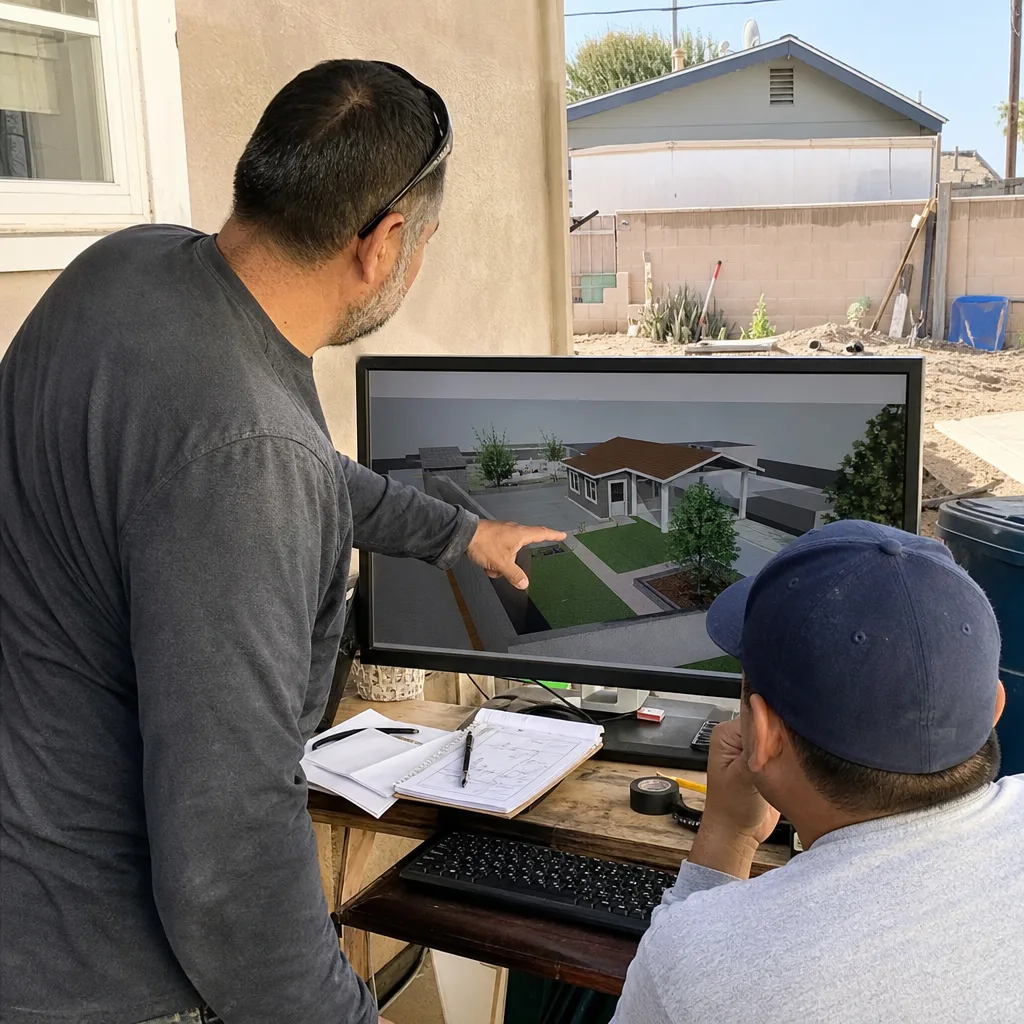
- Step 1: Verify Credentials Before the First Site Walk
- Step 2: Demand the Document Test
- Step 3: Read the Bid Like a Building Inspector
- Step 4: Close the Designer-versus-Builder Blame Gap
- Step 5: Negotiate Contract Clauses That Matter
- Rialto-Specific Code and Climate Considerations
- When Prefab Makes Sense in Rialto
- Common Mistakes to Avoid
- When to Call a Professional
- Frequently Asked Questions
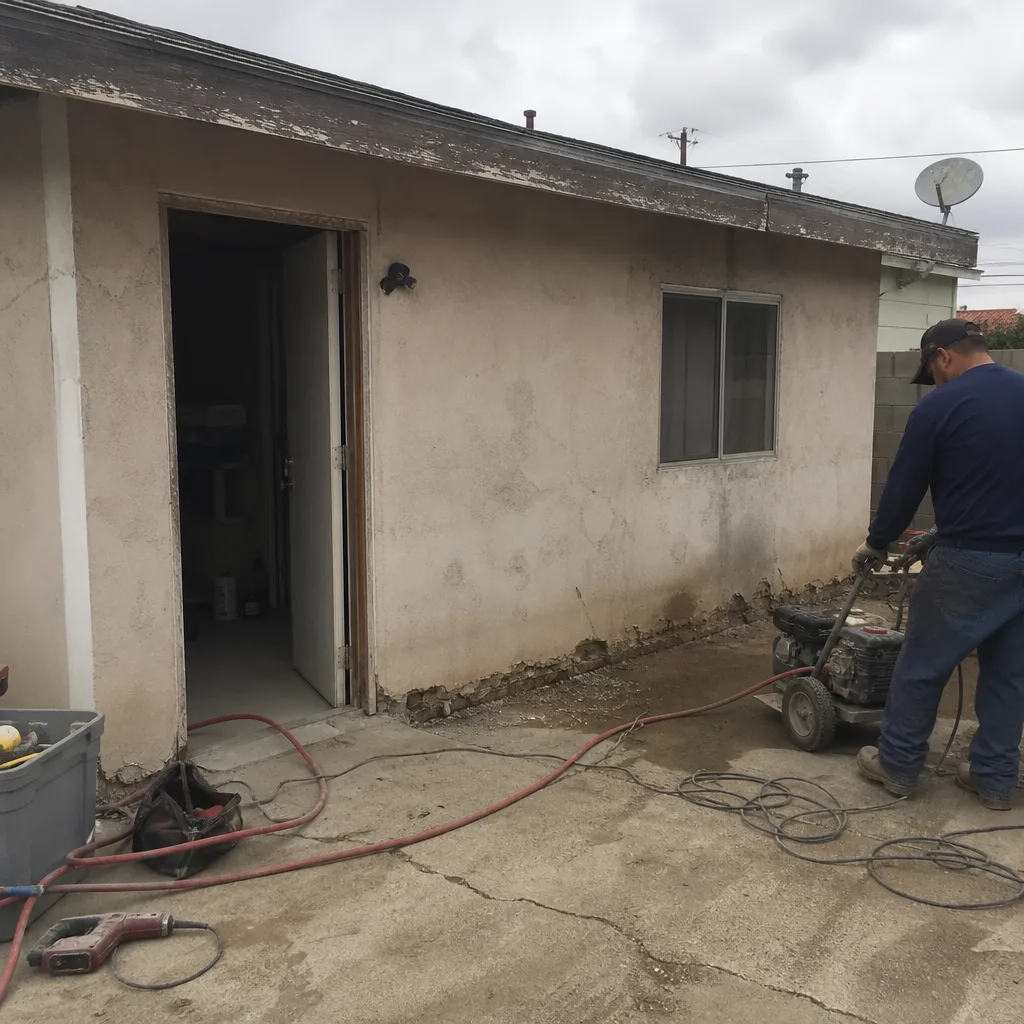 Before
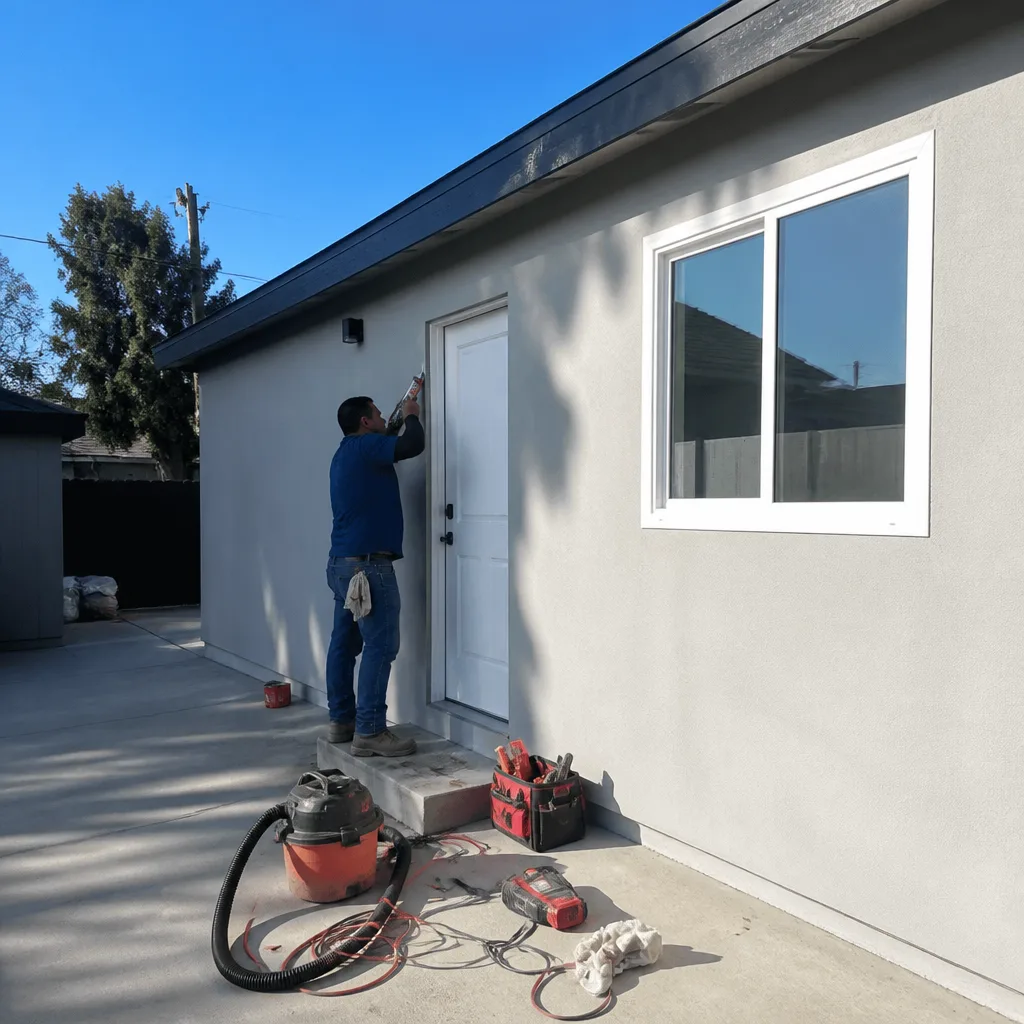 After
AfterStep 1: Verify Credentials Before the First Site Walk
Most homeowners in Rialto check a contractor’s website and stop there. The three documents that actually protect you take ten minutes to verify, and no legitimate operator will hesitate to provide them.
CSLB License Verification
California requires any construction work over $500 to be performed by a CSLB-licensed contractor. Visit cslb.ca.gov and enter the license number. Confirm three things: the status reads “Active,” the classification includes B (General Building Contractor) or C-36 (Plumbing) or C-10 (Electrical) as appropriate for ADU work, and the workers’ compensation insurance section shows “Certificate on file” if the contractor employs anyone. Solo operators can claim exemption, but ADU construction requires crews. An exempt status is a red flag for a project this size.
Cross-check the business name on the CSLB record against the name on the estimate. Mismatches suggest a borrowed license, where an unlicensed operator works under someone else’s number. This voids your legal protections and can freeze your permit if the city notices.
Workers’ Compensation Certificate
Request a certificate of insurance directly from the contractor’s insurance broker, not a PDF from the contractor. The certificate should name you as “certificate holder” and show coverage dates that span your project timeline. In Rialto, where summer temperatures regularly hit 95°F and foundation work carries injury risk, uncovered workers on your property become your liability if they’re hurt.
Rialto Business License
Call Rialto City Hall at (951) 476-1467 or search the city’s business license database. A contractor working in Rialto without a local business license is operating illegally, and permits pulled under an unlicensed operator can be red-tagged mid-construction. This check takes two minutes and has saved more than one Muscoy-area homeowner from a six-month permit freeze.
At Ellery ADU Studio Rialto, our CSLB license number appears on every page. We provide certificates of insurance on request, and we maintain current licensure in every jurisdiction where we build, including Rialto.
Step 2: Demand the Document Test
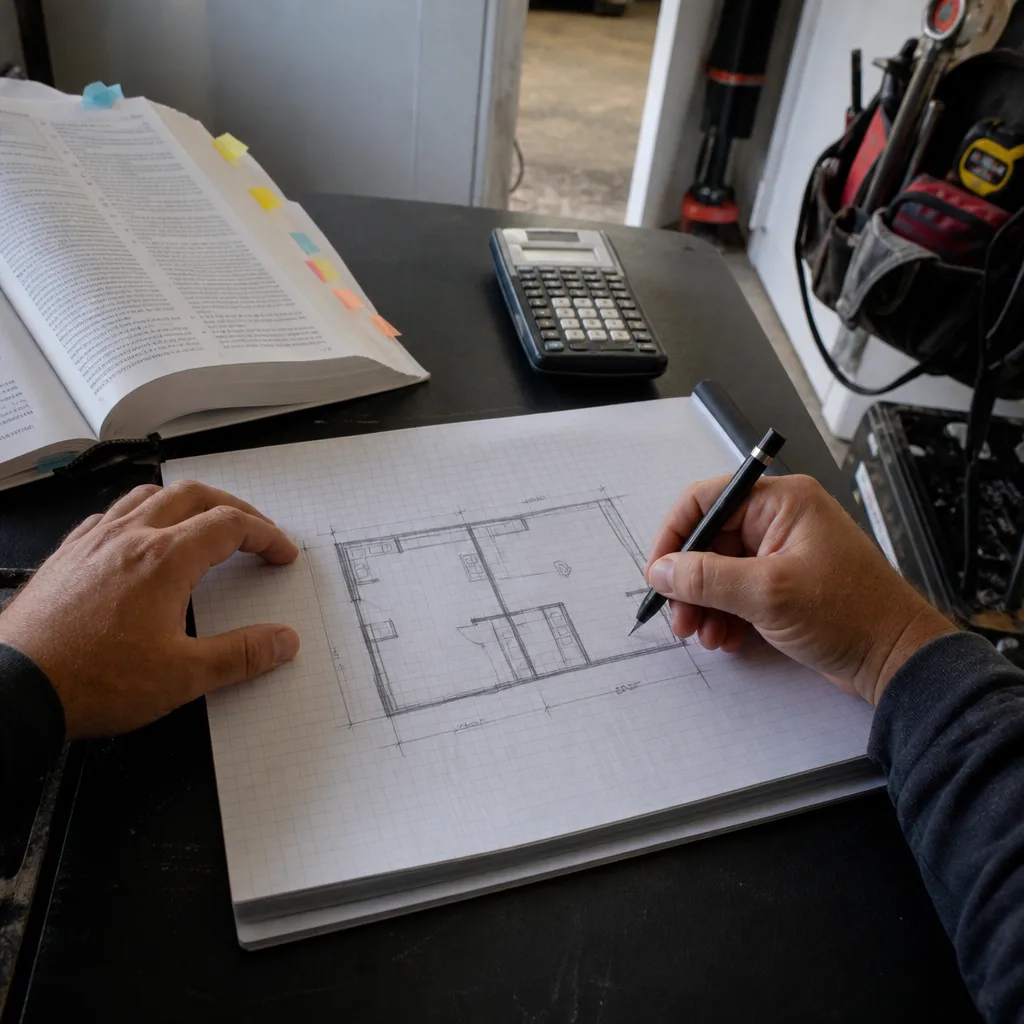
A qualified ADU contractor should hand you a written scope of work referencing specific plan sheet numbers, not a paragraph description. This is the document test, and most bids fail it.
What a Passing Document Looks Like
Request these four documents before you sign anything:
- Permit-ready drawing set - including site plan, floor plans, elevations, sections, and structural calculations, each sheet numbered and stamped by a California-licensed architect or engineer.
- Written scope of work - referencing plan sheet numbers for every major assembly: “Foundation per Sheet S-001, stem wall with slab-on-grade, 4-inch minimum thickness per geotechnical report.”
- Line-item estimate - breaking costs into foundation, framing, MEP (mechanical, electrical, plumbing), finishes, and permit fees, with no single “allowance” exceeding 15% of the total.
- Inspection schedule - listing each city inspection (foundation, framing, insulation, final) and the payment milestone tied to it.
A bid that describes work in prose - “We’ll handle the foundation, framing, and utilities” - gives you no leverage when disputes arise. A bid that cites Sheet S-001, Detail 3 lets you hold the contractor to the drawing the city already approved.
Since 2015, we’ve produced over 900 documented permit sets at ADU Design & Permitting in Rialto. Every client receives the full drawing set before construction pricing is finalized, because the drawing controls the cost. Without it, you’re buying a guess.
Step 3: Read the Bid Like a Building Inspector
Building inspectors in Rialto don’t read intent. They read plan sheets and code sections. Your bid should be written the same way.
Red Flags in Bid Format
- Lump-sum bids with no line-item breakdown - You cannot verify material allowances or compare scope between contractors. A $180,000 lump sum could hide $40,000 in unstated exclusions.
- Allowances exceeding 15% of total - Large allowances signal unspecified scope. When tile, fixtures, or appliances aren’t selected, the final price drifts upward. Under Haven Standard Clause 1, every project carries a written price before work starts; allowances are named, capped, and tracked.
- Verbal change-order policies - “We’ll figure it out as we go” guarantees conflict. Written change orders, signed by both parties, are the only enforceable method.
- No reference to specific code cycle - Rialto operates under the 2022 California Building Code with local amendments. A bid that doesn’t cite the applicable code may be priced against outdated requirements, producing surprises at plan check.
The Foundation Line Item: A Rialto Example
Rialto’s soils vary significantly. The Muscoy area west of Cedar Avenue sits on sandy loam with moderate expansion potential. Properties north of the 210 freeway, near the foothills, can encounter decomposed granite and steeper grades requiring retaining walls. A competent bid specifies soil treatment: “Expansive soil mitigation per geotechnical report, Section 4.2 - post-tensioned slab or pier-and-grade-beam per engineered design.” See our Seasonal ADU Care for Rialto: Year-Round Homeowner’s Guide for how soil conditions shift with wet and dry seasons.
A bid that says “foundation per standard” without referencing a specific engineering document is priced for the cheapest possible condition. When the soils test comes back, you eat the difference.
Our Garage Conversion ADU in Rialto page lists typical all-in ranges for drawings through final inspection, because homeowners deserve a dollar figure they can plan around before committing to a site walk.
Step 4: Close the Designer-versus-Builder Blame Gap
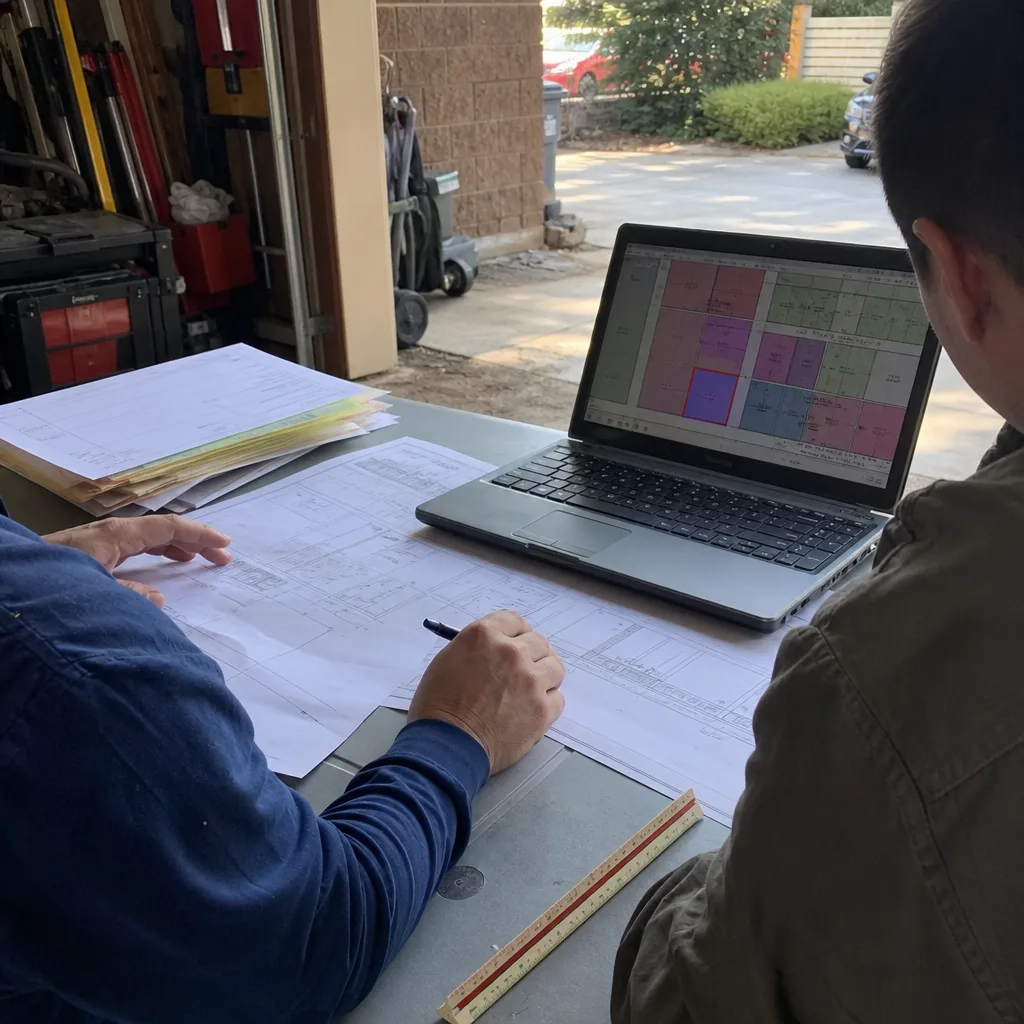
The most expensive problem in ADU construction isn’t material cost or labor shortage. It’s the gap between designer and builder, each pointing at the other when the building department rejects a detail.
How the Blame Gap Forms
Homeowner hires an architect for $8,000-$15,000 to produce schematic drawings. Homeowner then solicits bids from three contractors, who price against those schematics. Contractor A wins, starts construction, and the city inspector notes that the roof tie-in detail on Sheet A-3 doesn’t meet Rialto’s wind-load requirements for the 60-mph gust zone. Architect says the detail was schematic, not construction-ready. Contractor says they bid what was drawn. Homeowner pays $6,000 for revised engineering and loses six weeks to re-permitting.
We’ve seen this sequence repeat across San Bernardino County. It is not rare. It is the default outcome when design and construction are separate contracts.
The Single-Contract Alternative
A design-build studio holds one contract for drawings, permit set, and construction. If the roof detail fails inspection, the studio revises the drawing and absorbs the cost. There is no finger-pointing because there is no second party to point at.
At Ellery ADU Studio, our New Detached ADU in Rialto projects run under a single agreement. The permit set is our core product, not an afterthought purchased from a third party. When we price construction, we price against our own drawings, which we know will pass plan check because we wrote them to pass.
When Separate Contracts Make Sense
Design-build isn’t the only valid model. If you have a long-standing relationship with an architect whose work you admire, or if your project involves historic preservation requiring specialized design expertise, separate contracts can work. But you must insert a coordination clause: the architect produces permit-ready drawings (not schematics) before bidding, and the contractor reviews the full set for constructability before signing a fixed-price agreement. This review typically costs $2,000-$4,000 and is the cheapest insurance you’ll buy.
Step 5: Negotiate Contract Clauses That Matter
California law requires specific disclosures in home improvement contracts over $500. Beyond compliance, five clauses determine whether your project finishes on budget and on terms.
Fixed-Price versus Cost-Plus
Fixed-price contracts lock the total. Cost-plus contracts bill actual costs plus a percentage fee, transferring all price risk to you. For ADUs, where material volatility and permit delays are predictable, fixed-price is the standard for owner protection. Under Haven Standard Clause 1, every Ellery project carries a written price before work starts. The words “call for a quote” do not appear on any page of our site because they contradict the guarantee.
Lien Release Schedule
California mechanics’ liens can be filed by anyone who supplies labor or materials to your project. Your contract should specify that you receive unconditional lien releases from the contractor, subcontractors, and material suppliers before each progress payment. Without this schedule, a subcontractor who wasn’t paid by your GC can lien your property even though you paid the GC in full.
Request a preliminary 20-day notice list at contract signing. This document names every subcontractor and supplier who may file a lien. If someone works on your project who isn’t on the list, that’s a contract violation.
Inspection Hold Clause
The most important protection you’ve never heard of: no payment milestone releases until the corresponding city inspection passes. This prevents the common scenario where framing is “complete” but fails inspection for seismic strap spacing, and the contractor has already cashed your check. With an inspection hold clause, the contractor’s incentive aligns with code compliance, not speed.
Our standard agreement structures payments as follows: 15% at permit issuance, 25% at foundation pass, 25% at framing/rough MEP pass, 25% at insulation/drywall pass, 10% at final inspection and certificate of occupancy. No exceptions.
365-Day Done Right Promise
Most contractor warranties cover defects in workmanship for one year. Few define “defect” or specify the remedy. Under Haven Standard Clause 7, our 365-Day Done Right Promise states: if the finished ADU is not built to the permitted drawings, we make it right - in writing, before the project starts. The standard is objective (permitted drawings), not subjective (your satisfaction).
Rialto-Specific Code and Climate Considerations
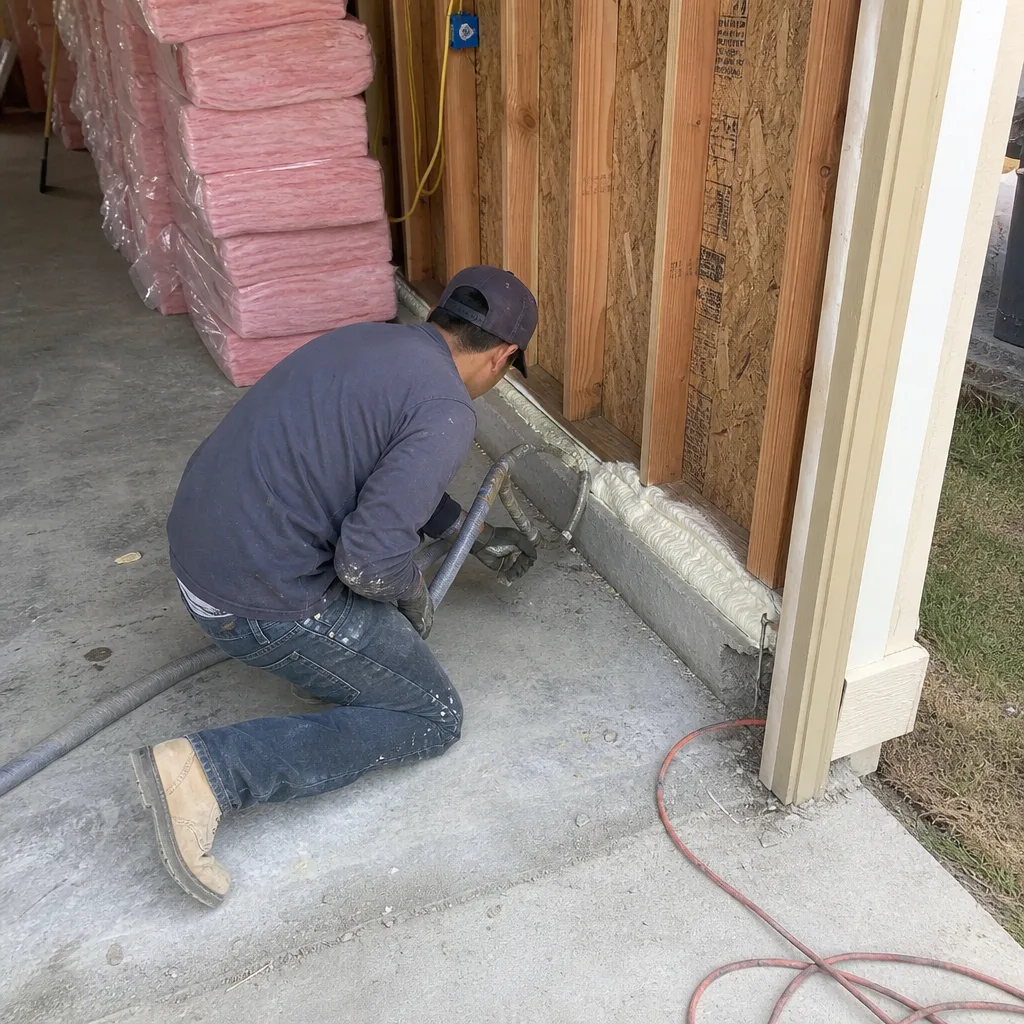
Rialto’s location in western San Bernardino County creates conditions that affect ADU design and pricing in ways that don’t apply to coastal California.
Wind and Seismic Loads
Rialto sits in a 60-mph design wind speed zone per ASCE 7-16, with seismic design category D - high seismic hazard. Roof tie-ins, especially for garage conversions where the existing structure predates modern anchorage standards, require engineered connections. A bid that prices “standard roofing” without referencing wind uplift calculations is under-engineered.
Heat and Energy Code
With summer highs regularly exceeding 95°F and cooling degree days among the highest in the region, Rialto ADUs must meet Title 24 Part 6 energy standards with particular attention to envelope performance. Budgeting for these requirements is covered in our ADU Cost Breakdown: The Rialto Homeowner’s Reference for 2026. We specify cool-roof assemblies with SRI (Solar Reflectance Index) values above 16 for low-slope applications, and we size HVAC systems using ACCA Manual J load calculations rather than rules of thumb. Oversized equipment cycles inefficiently and fails to dehumidify; undersized equipment runs continuously and dies young.
Water and Sewer Connection Fees
Rialto charges ADU water and sewer connection fees based on meter size and fixture count. For a typical 1-bedroom, 1-bath ADU with kitchen, expect connection fees of $3,800-$6,200. These are separate from permit plan check and inspection fees, which run $2,500-$4,800 depending on valuation. A bid that lists “permits” as a single line item without separating city fees from design and engineering is hiding $6,000-$11,000 in hard costs.
Setback and Height Limits
Rialto follows state ADU law (Gov. Code 65852.2) with local amendments. Key details: detached ADUs are limited to 16 feet in height in some Rialto zoning districts, which affects second-story junior ADU conversions. Side and rear setbacks default to 4 feet minimum, but corner lots and flag lots have modified requirements. A site-specific survey, not a Zillow satellite view, determines buildable area.
When Prefab Makes Sense in Rialto
Prefabricated and modular ADUs reduce on-site construction time, which matters in Rialto’s 110°F July afternoons. But prefab is not a shortcut around permitting, and not every brand coordinates design, delivery, and foundation under one contract.
We specify and coordinate prefab systems from Abodu, Cover, Dvele, Mighty Buildings, and other manufacturers within our single design-build agreement. The studio handles site prep, utility rough-in, foundation engineering, crane scheduling, and final connection - the same written price, the same permit-ready documentation.
Prefab makes sense when: your site has clear crane access (minimum 14-foot width for truck delivery), your soil conditions suit a standardized foundation detail, and you value speed of enclosure over custom layout. It makes less sense when: your lot is irregular, your grading requires retaining walls, or you need a layout that deviates from the manufacturer’s standard modules.
In Rialto’s Las Colinas and El Rancho neighborhoods, where lots are typically 6,000-7,500 square feet with alley access, prefab delivery is often straightforward. In the hillside areas north of the 210, site constraints frequently favor stick-built construction with engineered foundations.
Common Mistakes to Avoid
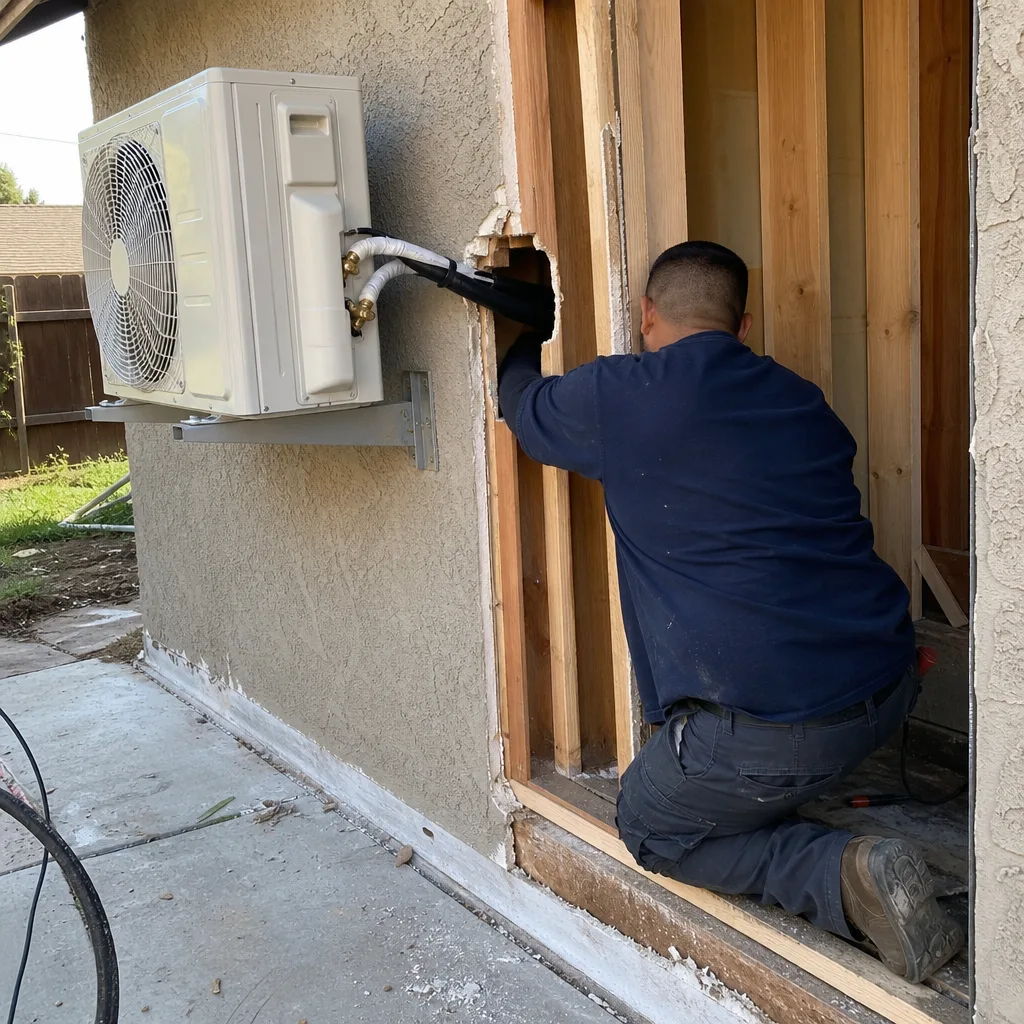
- Starting with a contractor bid before securing a permit-ready drawing set. The bid is meaningless if the city rejects the underlying design. In Rialto, plan check revision cycles average 4-6 weeks. Each cycle costs time and often triggers change orders.
- Accepting a “verbal estimate” from a contractor who hasn’t walked the site. Soil conditions, utility locations, and existing structure adequacy cannot be assessed from satellite imagery. We’ve found undocumented septic systems, unmapped easements, and 1950s-era clay pipe that collapsed during trenching - all invisible until boots are on the ground.
- Ignoring the Rialto business license check. San Bernardino County has seen multiple contractor scams in the past three years where operators used valid CSLB numbers but lacked local licensure. Permits were red-tagged, homeowners lost deposits.
- Signing a cost-plus contract without a guaranteed maximum price. Open-ended cost exposure is appropriate for commercial development with professional owner’s representatives. For a residential ADU, it’s a recipe for budget overrun.
- Failing to verify that the contractor’s insurance names your property address. General liability policies cover specific job sites. A certificate showing “any location” may not protect you if the claim arises from your project.
- Assuming state ADU law overrides all local requirements. Rialto cannot prohibit ADUs, but it can impose design standards, parking requirements (in limited circumstances), and utility connection fees. A contractor who says “state law says we can build anything” hasn’t read the local amendments.
When to Call a Professional
Call a design-build professional when your project involves any of the following: existing structure modification (garage conversion, attached ADU), utility extension beyond 50 feet from the main residence, hillside or retaining wall work, or any condition where the designer and builder might disagree about responsibility.
For homeowners in Rialto who have a written estimate in hand and want verification, Ellery ADU Studio Rialto offers a Free Second Opinion. We’ll review the scope, the drawing set, and the pricing against current market rates and code requirements. No obligation.
To schedule your free estimate, call (951) 476-1467. A live person answers 24/7.
Frequently Asked Questions
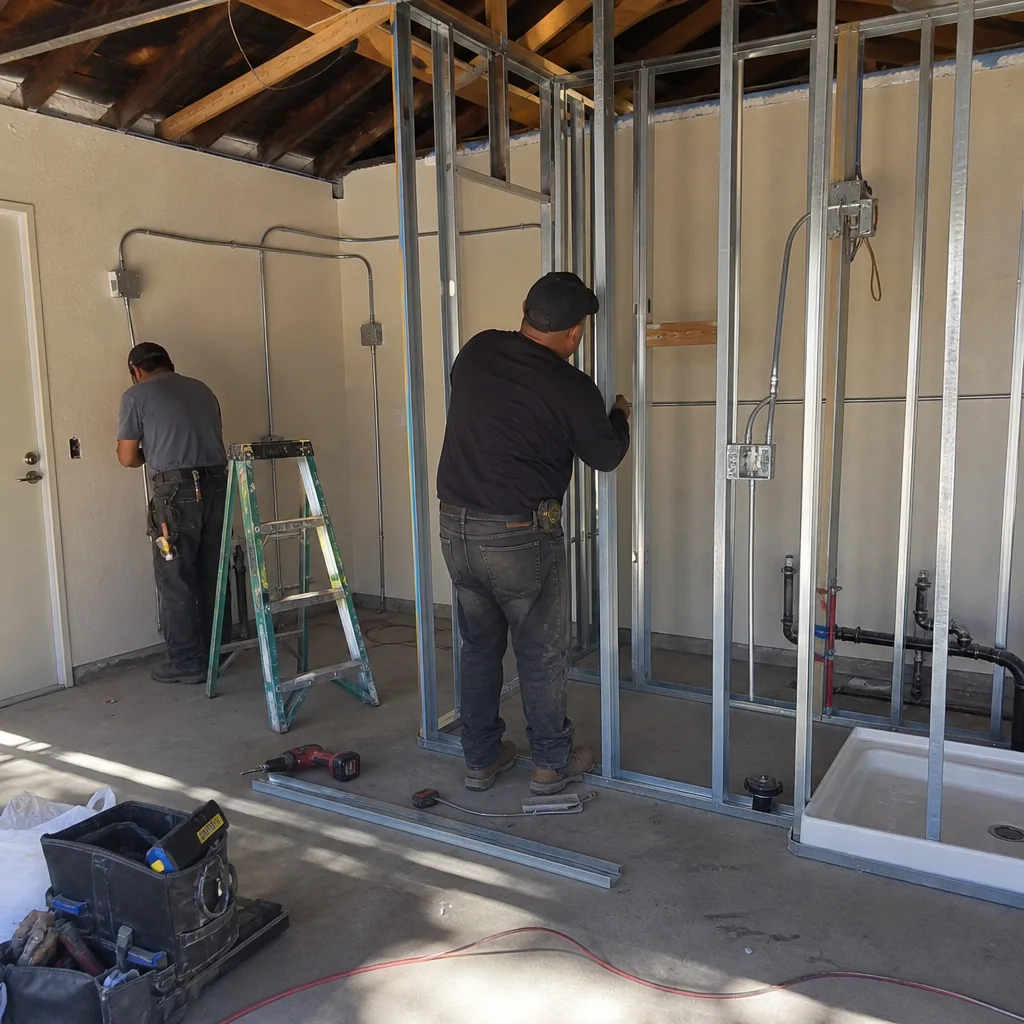
Garage conversion ADUs in Rialto typically run $85,000-$140,000 all-in, from drawings through final inspection. New detached ADUs range $180,000-$320,000 depending on size, foundation type, and finish level. These ranges include permit fees, engineering, and utility connections but exclude site-specific conditions like extensive grading or septic replacement. Every Ellery project is quoted with a written price before any work begins, per Haven Standard Clause 1. Call (951) 476-1467 for an exact quote on your property - estimates are free.
From permit application to certificate of occupancy, expect 8-14 months for a garage conversion and 12-18 months for a new detached ADU. Rialto’s plan check timeline averages 6-10 weeks for a complete submittal, with 2-4 weeks for each revision cycle. Construction duration runs 4-6 months for conversions and 6-10 months for detached units, weather and inspection scheduling dependent. Prefab systems can reduce on-site construction by 30-50% but do not compress permitting time.
One firm can handle both under a design-build contract, which eliminates the designer-versus-builder blame gap. This is the model Ellery ADU Studio operates under. Separate contracts work if the architect produces permit-ready drawings (not schematics) before bidding, and the contractor reviews the full set for constructability before pricing. The coordination review typically costs $2,000-$4,000 and is essential for gap prevention.
Under a fixed-price contract with a defined scope and permit-ready drawings, the price should not change unless you request modifications or unforeseen conditions emerge (undocumented utilities, hazardous materials, soil conditions requiring engineered remediation). Under Haven Standard Clause 5 (No Surprises), our scope is locked at signing; no door-side upsells, no scope creep. Any legitimate unforeseen condition is documented with photos and priced in a written change order before work proceeds.
Ellery ADU Studio pulls all permits as the licensed contractor of record. The permit set is produced in-house, submitted to Rialto Building & Safety, and tracked through plan check and inspection. You receive copies of all approvals and the final certificate of occupancy. Homeowner-pulled permits are possible for owner-builders but create liability exposure and scheduling complexity most homeowners underestimate.
Three conditions must be met: the garage structure must be legally permitted (verify with Rialto Building & Safety - unpermitted structures require legalization first), the existing slab must be adequate for conversion (typically 4-inch minimum, with vapor barrier and reinforcement - we test and document), and the ceiling height must clear 7 feet 6 inches after insulation and finish. Setback and lot coverage requirements also apply. We evaluate all three conditions during our initial site assessment, with photos provided.
The Bottom Line
Hiring an ADU contractor in Rialto is not like hiring a kitchen remodeler. The permit set controls cost, and most cost overruns trace to bids written against incomplete drawings. Verify credentials in ten minutes. Demand a written scope referencing specific plan sheets. Read for red flags: lump sums, oversized allowances, verbal change policies. Close the designer-builder gap with a single contract or a rigorous coordination clause. Structure payment to inspection passes, not calendar dates. These steps don’t guarantee a perfect project, but they eliminate the structural failures that turn ADUs into financial disasters.
Written by Nadia Ellery, Owner at Ellery ADU Studio Rialto, serving Rialto since 2015.