
Last updated September 25, 2026
Seasonal ADU Care for Rialto: Year-Round Homeowner’s Guide
Rialto’s average July high of 102°F degrades HVAC refrigerant seals and roof flashing caulk on a faster cycle than coastal California specs assume. The mini-split installed to coastal standards will show performance loss within three years without Inland Empire-specific service intervals. In this guide, we’ll walk through a maintenance calendar built for Rialto’s actual weather patterns: 100°F summers, Santa Ana wind events, and near-zero freeze risk. You’ll learn when to service what, how California’s landlord-tenant laws affect your maintenance obligations, and how to document everything so your ADU stays an asset, not a liability. For ADU Design & Permitting Maintenance Checklist for Rialto Homeowners, see our companion resource.
Quick Answer
ADU maintenance in Rialto follows a three-season calendar: pre-summer filter and caulk checks (April-May), peak-heat HVAC and ventilation audits (June-September), Santa Ana wind gutter and exterior inspections (October-December), and winter moisture and safety-device checks (January-March). Renter-occupied ADUs require documented compliance with California Civil Code § 1941 for heating, plumbing, weatherproofing, and structural safety. See ADU Permits, Codes & Inspections in CA: What You Need to Know for the full regulatory framework.
Table of Contents
- Pre-Summer Preparation: April-May
- Peak Heat Season: June-September
- Santa Ana Wind Season: October-December
- Winter Wet Season: January-March
- Renter-Occupied ADU Maintenance & Legal Obligations
- Prefab and Modular ADU-Specific Care
- Building Your Maintenance Record
- Common Mistakes to Avoid
- When to Call a Professional
- Frequently Asked Questions
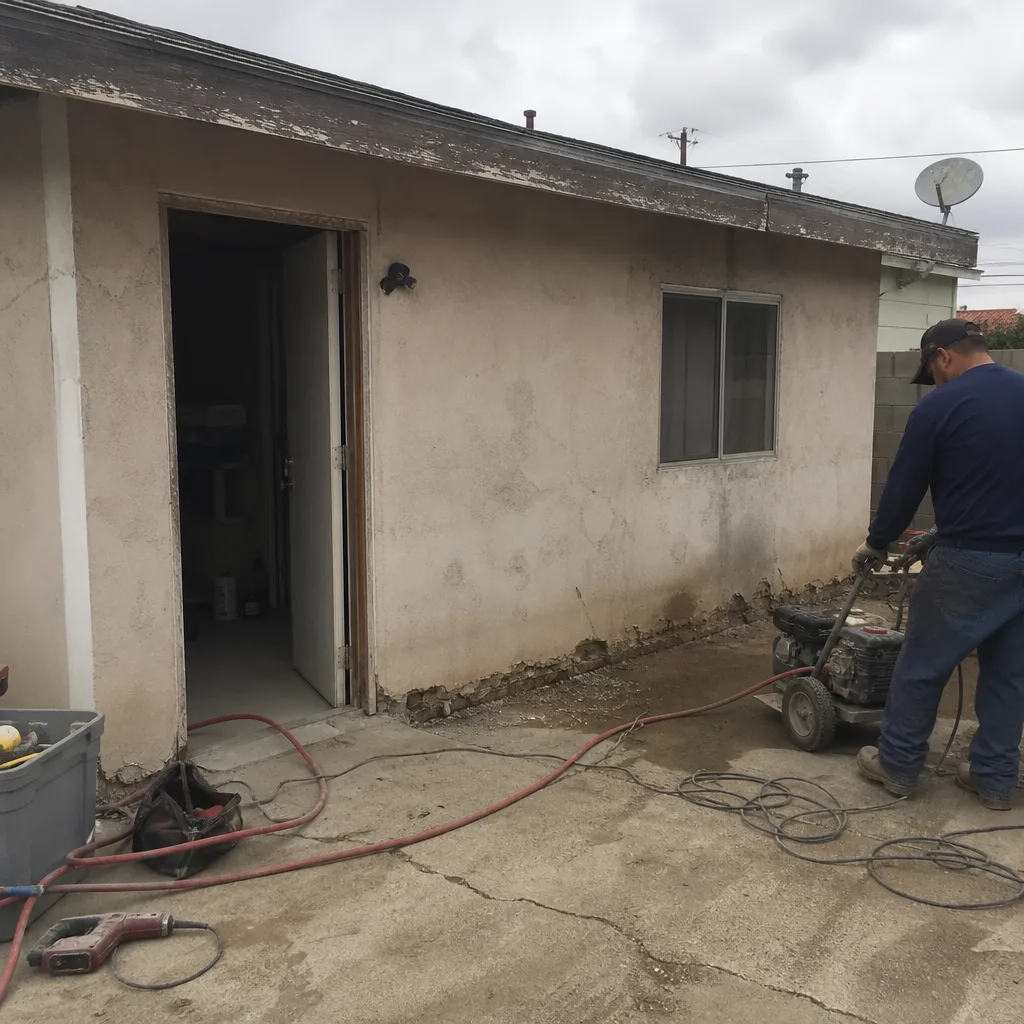 Before
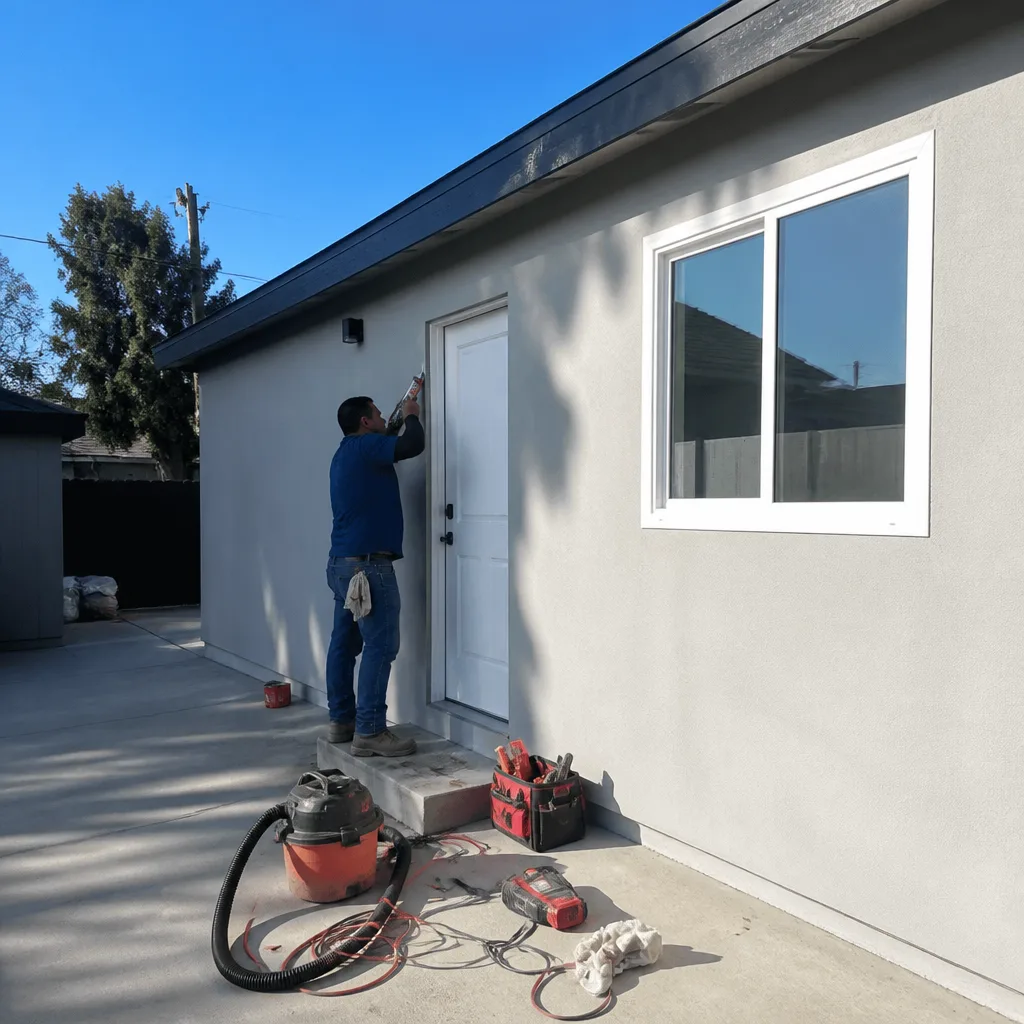 After
AfterPre-Summer Preparation: April-May
By late April in Rialto, the daily high crosses 80°F and keeps climbing. This is your window to catch problems before the thermal stress of summer makes them worse. We schedule most of our ADU Design & Permitting in Rialto pre-construction site visits in these months for exactly that reason: the conditions reveal how the structure handled winter, but the brutal heat hasn’t arrived yet.
Mini-Split Filter Cleaning and Coil Inspection
Most Rialto ADUs we build use ductless mini-splits for cooling efficiency in small footprints. The outdoor condenser sits exposed to Santa Ana dust and the fine particulate from I-10 and I-215 traffic. A clogged filter in April becomes a frozen coil in July, then a compressor replacement in August.
- Power down the unit at the breaker, not just the remote.
- Remove and wash the indoor filters with mild detergent; let them dry completely before reinstalling.
- Inspect the outdoor condenser fins for bent blades or debris accumulation. Straighten fins with a fin comb if needed.
- Check the refrigerant line insulation for UV cracking. Rialto’s sun exposure degrades foam insulation faster than the manufacturer’s coastal ratings suggest.
- Run the unit for 15 minutes and listen for compressor short-cycling. That’s the sound of low refrigerant or poor airflow.
If the unit was sized for coastal load calculations, it may be running near capacity already. A 12,000 BTU unit rated for 450 square feet in San Diego is working harder in a 450-square-foot Rialto ADU with a west-facing window. We account for this in our load calculations at Ellery ADU Studio Rialto home, but retrofitted or owner-added units often miss the correction.
Roof Flashing and Stucco Caulk Inspection
Rialto’s ADU stock includes a high proportion of stucco-clad structures, both stick-built and modular. Stucco breathes, but the control joints and window-to-wall transitions rely on elastomeric caulk that cures brittle after three to four summers. April is the month to walk the perimeter with a caulk gun and a critical eye.
- Check caulk at window heads, sills, and jambs; at door thresholds; and at any penetration through the stucco (dryer vent, electrical conduit, gas line).
- Look for hairline cracks in the stucco itself. Hairline cracks wider than 1/16 inch allow water intrusion when winter rains arrive, and they widen with thermal cycling.
- Inspect roof flashing at the ADU-to-main-house connection for garage conversions, or at any valley or penetration on detached units. The metal expands and contracts; the sealant doesn’t.
We document every caulk condition photo in our project records. If you’re maintaining an ADU we didn’t build, start your own folder. The photo with a date stamp is evidence if moisture damage develops later.
Peak Heat Season: June-September
Rialto’s summer is not a mild inconvenience. The National Weather Service records 30+ days above 100°F annually, and the overnight low often stays above 70°F. This sustained thermal load stresses every building system differently than intermittent heat spikes do.
Attic Ventilation Audit
ADUs with pitched roofs, whether New Detached ADU in Rialto or converted garage with a roof lift, need active ventilation. Passive ridge vents work in mild climates. In Rialto, they often don’t move enough air to keep attic temperatures below 130°F, which is the threshold where asphalt shingles degrade rapidly and ceiling insulation loses effectiveness.
Check for:
- Blocked soffit vents from insulation overfill or wasp nests. Rialto’s paper wasps love sheltered soffits.
- Non-functioning powered vents. The thermostat should trigger at 90°F to 100°F attic air temperature.
- Insulation displaced by wind or rodents. The Inland Empire has active roof rat populations, especially near the foothill edges of Rialto’s northern neighborhoods.
If your attic hits 140°F in August, your ceiling is radiating heat into the living space after dark. The mini-split runs overnight. The tenant’s electric bill spikes. That’s a maintenance failure that becomes a habitability issue.
Window Weatherstripping and Solar Gain Control
Dual-pane vinyl windows are standard in Rialto ADUs built after 2015, but the weatherstripping is often the weak point. Compression seals flatten after two to three years of 100°F+ exposure. Check by closing the window on a strip of paper: if it pulls out without resistance, the seal is gone.
For west- and south-facing windows, consider exterior solar screens or reflective film applied to the outer surface. Interior film traps heat in the glass, which actually increases the cooling load in a small space. We specify exterior shading in our permit sets when orientation demands it.
HVAC Efficiency Test: The Refrigerant Check
This is the critical test competitors skip. A mini-split running low on refrigerant will still blow cool air. It just runs longer, works harder, and eventually burns out the compressor. The signs are subtle: slightly longer cooling cycles, a faint hissing at the line set connection, or ice on the indoor coil during heavy use.
A qualified HVAC technician can measure subcooling and superheat to verify charge level. In Rialto, we recommend this test every two years, not the five-year interval common in coastal markets. The thermal expansion valve sees more cycles here. The seals age faster. The cost of a refrigerant top-off and leak repair, typically $200-$400, is trivial against a $2,500 compressor replacement.
Under the Haven Standard, Clause 5 (No Surprises), any refrigerant leak found during our documented maintenance visit is photographed, explained, and quoted in writing before repair. No door-side upsells.
Santa Ana Wind Season: October-December
The Santa Anas arrive dry, fast, and full of particulate. Sustained winds of 40+ mph are common, with gusts to 70 mph in exposed areas. For Rialto ADUs, this is the season of gutter damage, intake clogging, and accelerated exterior finish degradation.
Gutter Clearing and Downspout Routing
Rialto’s rainfall is concentrated in winter, but the debris arrives in fall. Eucalyptus leaves from mature trees, palm fronds, and wind-blown construction dust pack gutters solid. A clogged gutter overflows in the first January storm, saturating the foundation line or back-splashing onto stucco.
- Remove all debris by hand or with a gutter scoop. Don’t use a pressure washer; it forces water under the fascia.
- Run a hose from the high end and verify flow to the downspout. The outlet should clear in under 30 seconds for a 20-foot run.
- Check downspout extensions. They should discharge at least 6 feet from the foundation, or connect to a dry well if site constraints require closer routing.
- Inspect gutter hangers. Wind load pulls gutters away from the fascia over time; the gap is visible from ground level.
For Garage Conversion ADU in Rialto, pay special attention to the original garage door header area. The gutter often terminates abruptly at the former door opening, and the downspout may have been rerouted during conversion in ways that create pooling.
HVAC Intake Screening
The outdoor condenser inhales Santa Ana dust for weeks. Fine particles coat the condenser fins, reducing heat rejection and raising head pressure. After a wind event, inspect the intake screen (if present) and the fin surface. A soft brush and gentle water rinse from the inside out restores most of the loss. Never pressure-wash condenser fins; they fold flat and the unit never recovers.
Exterior Paint and Siding Inspection
UV exposure in Rialto is extreme. South- and west-facing walls show chalking, the powdery residue of oxidized paint binder, in as little as four years. Run your hand across the surface. If it comes away white, the paint is failing. Water will penetrate soon after.
For James Hardie fiber-cement siding, which we specify on many detached ADUs, the ColorPlus finish holds up better than site-painted alternatives. But the caulking at joints and penetrations still needs annual inspection. For Tuff Shed structures converted to ADU use, the factory finish is typically warranted for 10 years but requires re-caulking at panel seams within three to four years in this climate.
Boxabl units, with their proprietary exterior shell, have different maintenance protocols. The company specifies inspection of the membrane seals at panel joints annually. We coordinate this inspection within our single-contract maintenance visits for Boxabl ADUs we’ve placed in the Inland Empire.
Winter Wet Season: January-March
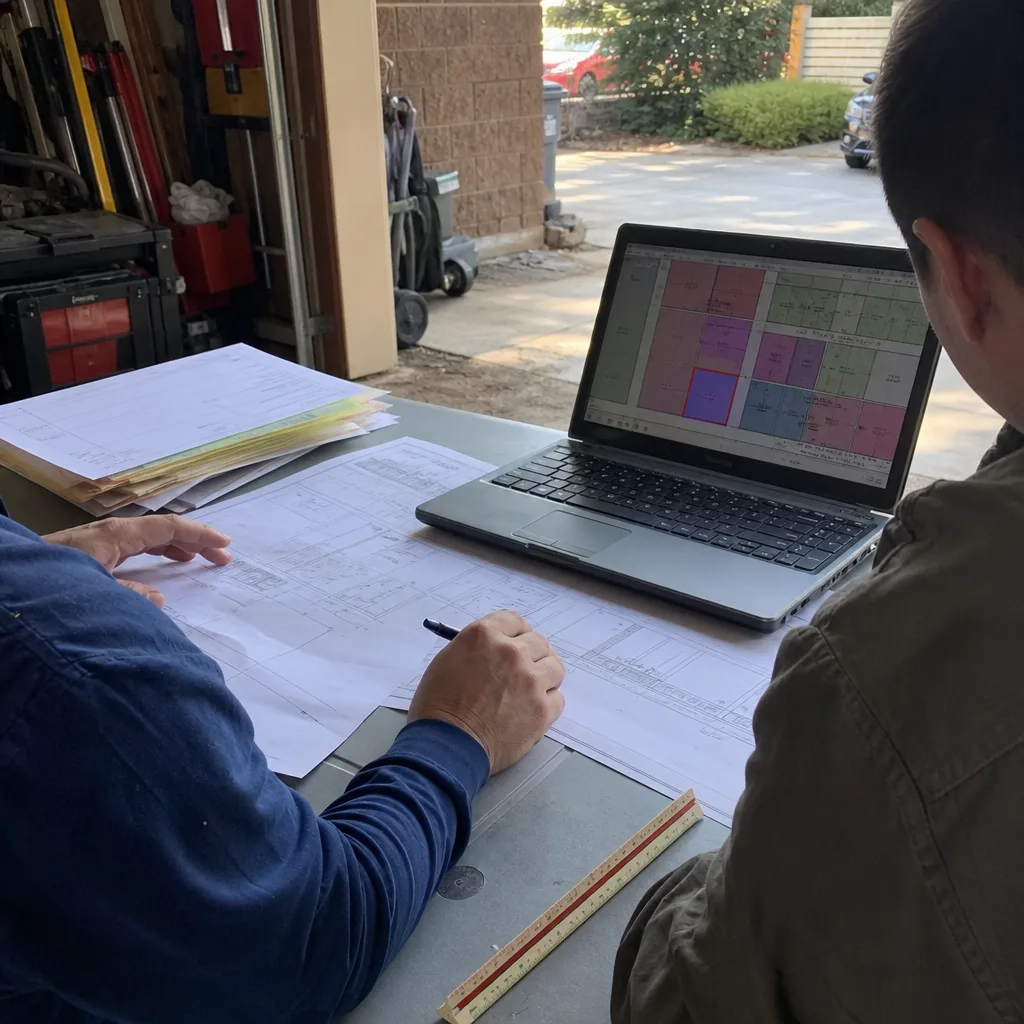
Rialto’s winter is mild by national standards but not trivial. Average rainfall of 14 inches concentrates in January through March. The soil, dry and shrunken from summer, expands when wetted. Foundation movement, subtle in summer, becomes measurable in winter. This is the season to catch water before it becomes mold, or movement before it becomes structural.
Downspout Routing and Grading Check
Water should flow away from the ADU foundation on all sides. In Rialto’s clay-heavy soils, the expansion when wet can lift slab edges and crack interior finishes. The fix is simple: maintain positive grade of 6 inches of fall in the first 10 feet from the foundation. Re-grade if settlement or landscaping has flattened the slope.
For ADUs with raised floors or crawlspaces, inspect the foundation vents. They should be open in dry weather, closed during rain events, and screened against rodents. Rialto’s mild winters mean rodents stay active year-round.
Crawlspace or Slab Moisture Inspection
Concrete slabs in Rialto are typically poured without vapor barriers in older construction, and even newer ADUs can develop moisture issues if the grade drainage fails. Signs include:
- Musty odor in the ADU, especially in morning hours before the HVAC cycles.
- Efflorescence on slab edges: white, crystalline deposits of mineral salts left by evaporating moisture.
- Soft spots in vinyl flooring or lifting of laminate edges.
- Corrosion on metal base plates or fasteners in wall framing.
A moisture meter reading above 16 percent in wood framing or 4 percent in concrete (by weight) warrants investigation. The source is usually exterior grade, not plumbing, but both need ruling out. We use thermal imaging during our documented visits to trace moisture paths without destructive testing.
Smoke and CO Detector Battery Replacement
California law requires smoke detectors in every sleeping area and CO detectors in any unit with fuel-burning appliances or attached garages. The battery replacement schedule should not wait for the chirp. We recommend January 1 for Rialto ADUs: it’s after the holiday occupancy peak, before the rainy season, and memorable.
Document the test with a photo of the detector’s test button activation and the date. For renter-occupied units, this documentation is part of your Civil Code § 1941 compliance record.
Renter-Occupied ADU Maintenance & Legal Obligations
California Civil Code § 1941 defines the landlord’s duty to maintain rental property in habitable condition. For ADU landlords in Rialto, this is not optional boilerplate. It’s a specific list with specific consequences for non-compliance, including rent withholding and habitability lawsuits.
What’s Legally Your Responsibility
The statute covers: effective waterproofing and weather protection; plumbing and gas in working order; hot water; heating; electrical; clean grounds and common areas; garbage disposal; floors, stairways, railings; and working locks on doors and windows. In Rialto’s climate, “effective weather protection” specifically means the stucco, roof, and window seals must perform through summer heat and winter rain.
What this means in practice:
- HVAC service is your cost, not the tenant’s, unless the lease explicitly assigns filter changes to the tenant. Even then, you must verify they’re happening.
- Roof leaks, gutter failures, and exterior caulk deterioration are your repair obligation, even if the tenant hasn’t complained.
- Smoke and CO detector function is your responsibility to maintain; tenant battery replacement doesn’t absolve you of verification.
Documenting Service for Tenant Records
Every maintenance action should generate a dated record: photo, description, and completion note. We provide this documentation as standard on every Ellery ADU Studio visit. If you’re self-managing, create a folder per unit with:
- Annual inspection checklist, completed and dated.
- Photo evidence of each item checked.
- Repair invoices with scope description.
- Tenant communication log, including any complaints and resolution.
This documentation is your defense if a habitability claim arises. It’s also your evidence for insurance if weather damage occurs and the carrier questions maintenance history.
Prefab and Modular ADU-Specific Care
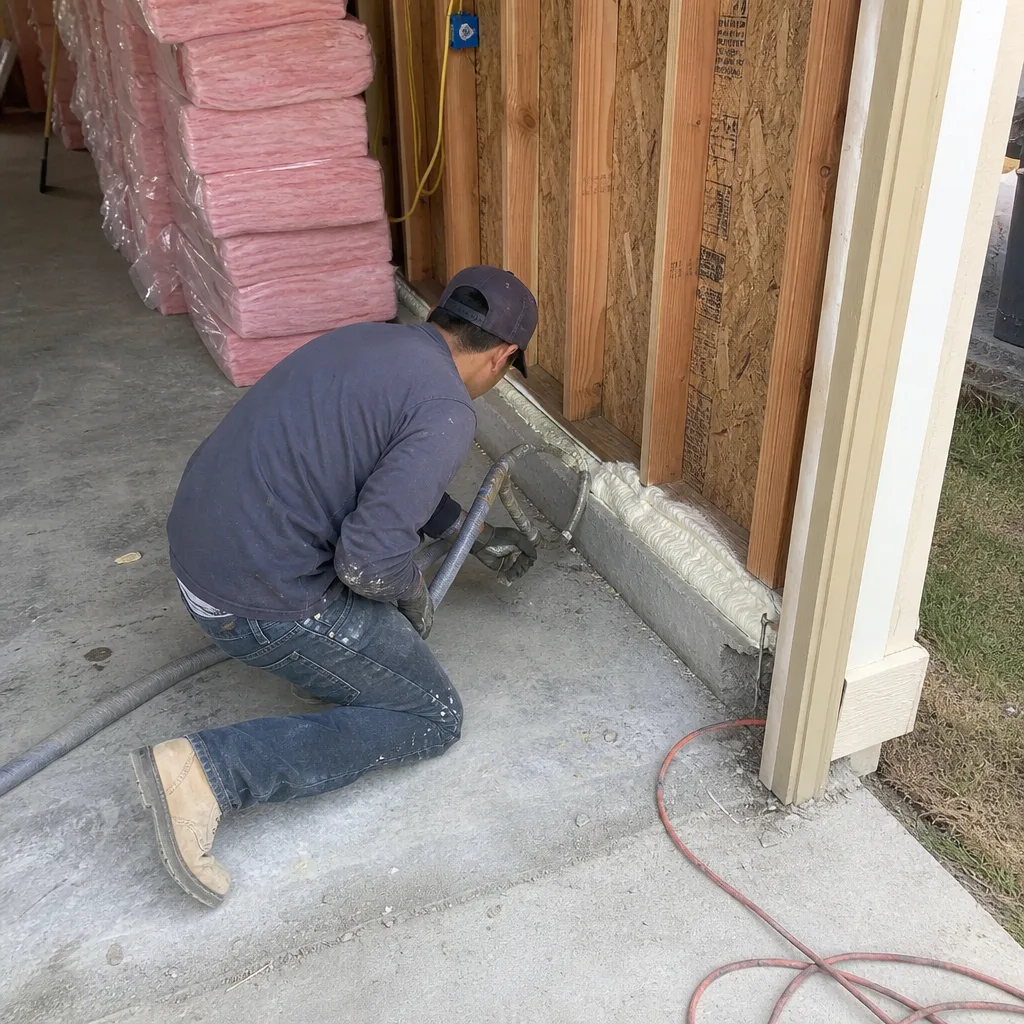
Prefab and modular ADUs in Rialto, including systems from Plant Prefab, Boxabl, and Tuff Shed, have maintenance profiles that differ from stick-built structures. The factory assembly is precise, but the transport and crane-set create unique stress points, and the proprietary materials have specific care requirements.
Plant Prefab units use a high-performance envelope with continuous exterior insulation. The membrane at panel joints must remain sealed; any gap is a thermal bridge and potential moisture path. Annual inspection of these joints is specified by Plant Prefab and included in our single-contract maintenance scope.
Boxabl’s fold-out design creates hinge points and flexible utility connections that need visual inspection after any seismic event or heavy wind load. The company’s maintenance manual specifies torque checks on certain fasteners at 12-month intervals.
Tuff Shed conversions rely on the original engineered connection between wall panels and foundation. The hold-down bolts and anchor straps are structural; corrosion or loosening is a life-safety issue in seismic events. We inspect these during our annual visits and document condition with photos.
James Hardie siding, common across multiple system types, requires re-caulking at trim joints and penetrations every three to five years in Rialto’s UV exposure. The ColorPlus finish doesn’t need repainting within its warranty, but the caulking is a maintenance item, not a warranty item.
Building Your Maintenance Record
A well-maintained ADU is worth more at sale, rents for more, and costs less over its life. The documentation proves it. Here’s the system we use on 900+ ADUs since 2015:
- Annual photo set: dated, geotagged, covering roof, exterior, mechanical equipment, interior conditions, and any tenant-reported issues.
- Written scope for any repair: what was found, what was done, what it cost, with before-and-after photos.
- HVAC service records: technician name, company, date, refrigerant pressures or subcooling/superheat readings, filter condition, and any recommendations.
- Utility trend analysis: a spike in summer electric use often precedes HVAC failure by one season.
This record becomes part of the property’s provenance. When you sell, the buyer’s inspector finds a documented history, not deferred maintenance disguised as “original condition.”
Common Mistakes to Avoid
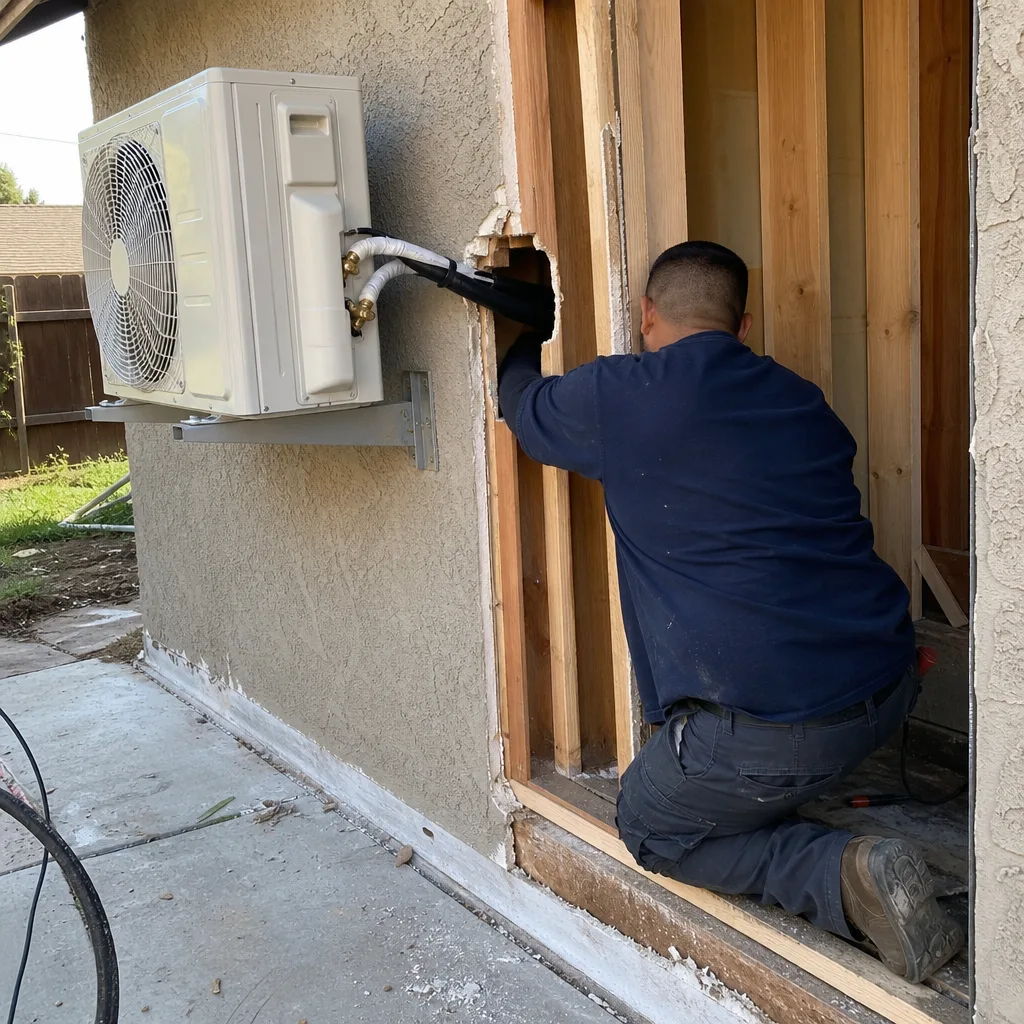
- Using coastal HVAC service intervals. A mini-split in Rialto needs filter cleaning twice as often as the same unit in San Diego, and refrigerant charge verification every two years, not five.
- Ignoring stucco hairline cracks. What reads as cosmetic in June becomes a moisture channel in January. Fill cracks with elastomeric caulk before the rainy season.
- Letting tenants handle all filter changes. Even responsible tenants miss filters, install them backward, or use the wrong MERV rating. Verify annually with a photo.
- Pressure-washing condenser fins. The high-pressure stream folds the aluminum flat permanently. Use a soft brush and gentle water flow from inside to out.
- Deferring gutter maintenance until rain starts. By January, the debris is wet, heavy, and frozen to the gutter bottom. Clean in October, when it’s dry and loose.
- Skipping the attic in summer. You can’t feel 130°F from the living room, but your shingles and insulation can. Verify ventilation function before July.
- Assuming prefab means zero maintenance. Factory precision doesn’t eliminate climate stress. Panel joints, transport stress points, and proprietary seals need scheduled inspection just as stick-built framing does.
When to Call a Professional
Some maintenance is homeowner-accessible. Some requires licensed expertise, both for safety and for documentation. Call a professional for: refrigerant handling (EPA certification required); electrical panel work or circuit additions; roof work on slopes steeper than 4:12; structural cracks in foundation or framing; and any gas line inspection or repair.
Ellery ADU Studio Rialto offers free estimates for maintenance assessments, system upgrades, and any ADU project from design through final inspection. We’ve designed, permitted, and built 900+ ADUs since 2015, every one with a written price before work started and a documented photo record when complete. Browse more guides & resources on ADU ownership. Call (951) 476-1467 to schedule your free estimate.
Frequently Asked Questions
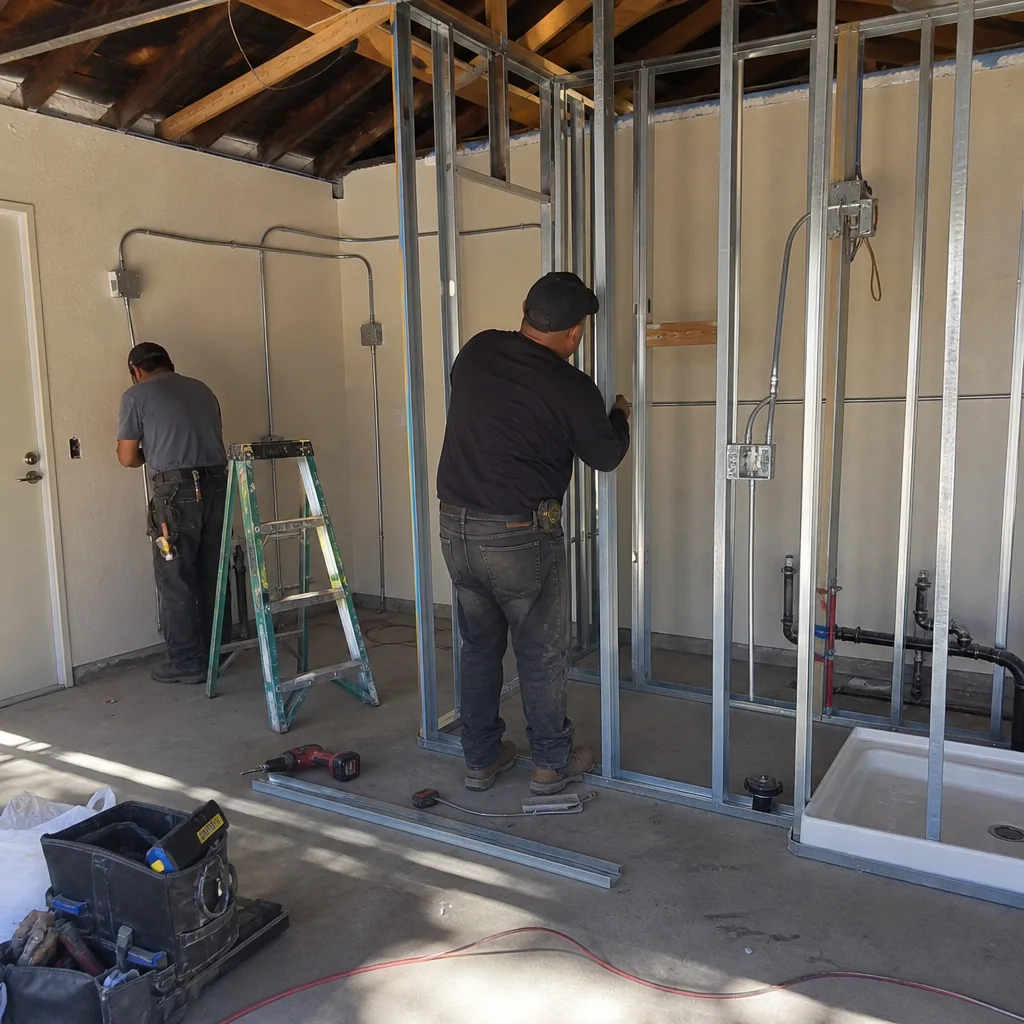
Homeowner-performed basic maintenance runs $200-$400 annually for filters, caulk, and gutter cleaning. Professional HVAC service with refrigerant verification adds $250-$450. A comprehensive annual inspection by a design-build studio, including thermal imaging and documented photo record, typically ranges $500-$900. For detailed cost planning, see our ADU Cost Breakdown: The Rialto Homeowner’s Reference for 2026. Call (951) 476-1467 for an exact quote on your ADU - estimates are free.
Filter cleaning every 60 days during peak use (May-October), coil inspection annually in April, and refrigerant charge verification every two years. Rialto’s heat and dust accelerate the intervals compared to coastal California.
Under California Civil Code § 1941, you must maintain weatherproofing, plumbing, heating, hot water, electrical, sanitation, structural safety, and working locks. In Rialto’s climate, this specifically includes functional HVAC, intact stucco and roof, and clear drainage. Document all service with dated photos.
Under Haven Standard Clause 1, every project is quoted with a written price before any work begins. Clause 5 locks the scope at signing. No door-side upsells, no scope creep. The price you approve is the price you pay.
A thorough assessment of a 400-800 square foot ADU takes 90-120 minutes, including roof, exterior, mechanical, interior, and documentation. Larger detached units or those with complex site conditions may take longer. We schedule a specific arrival window, not an all-day wait.
Yes, in specific ways. Panel joints, transport stress points, and proprietary seals need inspection on factory-built units. The underlying systems, HVAC, roofing, and waterproofing, need the same climate-appropriate care regardless of construction type. We specify and coordinate maintenance for Plant Prefab, Boxabl, Tuff Shed, and James Hardie systems within our single-contract scope.
The Bottom Line
Rialto’s climate demands a maintenance calendar built for 102°F summers, Santa Ana winds, and concentrated winter rain. Service the mini-split before the heat arrives, clear the gutters before the winds deposit debris, and document every action for tenant compliance and resale value. Prefab and modular ADUs need specialized attention at panel joints and transport stress points. The cost of scheduled maintenance is always lower than the cost of deferred failure.
Written by Nadia Ellery, Owner at Ellery ADU Studio Rialto, serving Rialto since 2015.