
Last updated September 25, 2026
DIY vs Professional ADU: The Rialto Homeowner’s Decision Guide
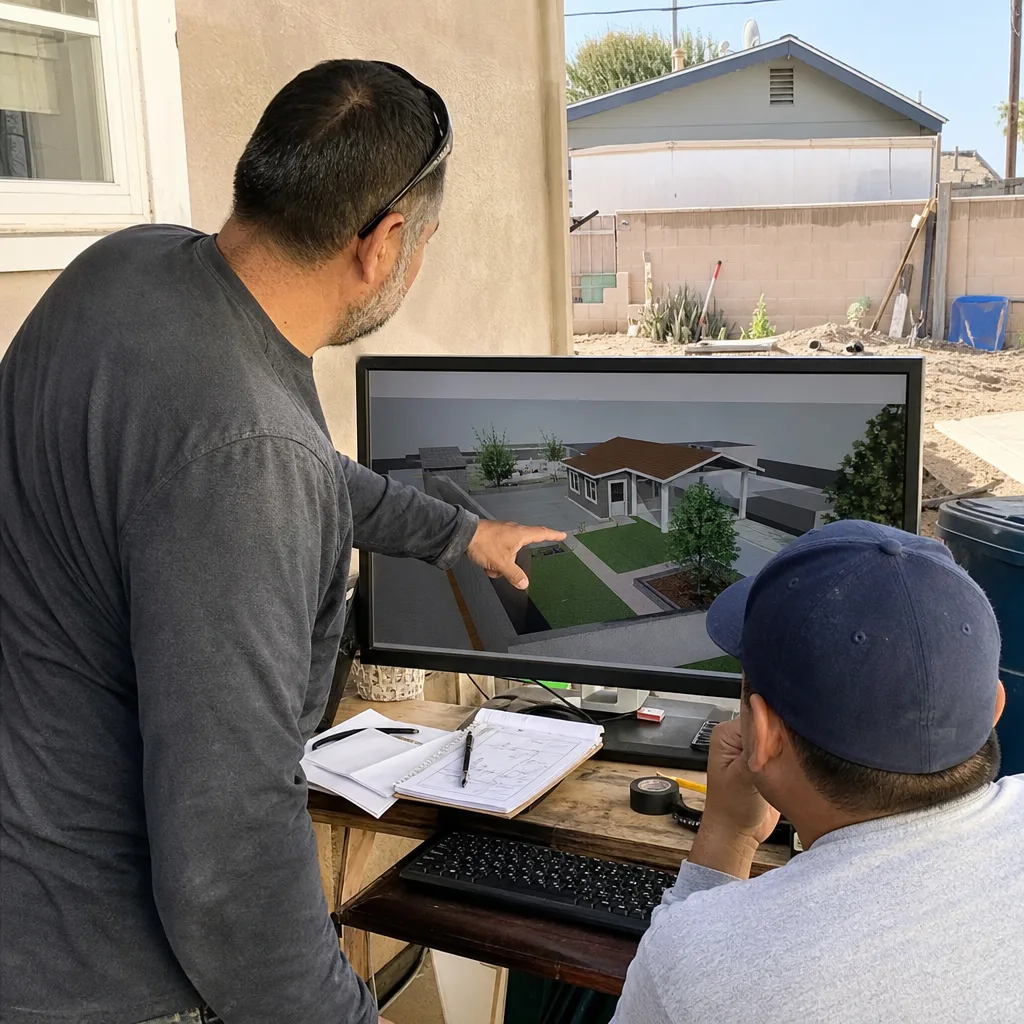
California’s owner-builder law lets you pull your own ADU permits, but here’s what the weekend-warrior blogs never mention: the permit set you submit to Rialto Building & Safety must contain the same engineering stamps, Title 24 energy calculations, and structural drawings that a licensed professional would provide. Nothing gets waived. The only thing that changes is whose name is on the liability. In our experience at Ellery ADU Studio Rialto home, the homeowners who come to us after a failed DIY attempt aren’t usually short on ambition. They’re short on the 200-plus hours it takes to produce a permit-ready set, and they’ve already spent $8,000-$15,000 on drawings that plan check rejected for missing shear-wall details or outdated energy compliance. This guide maps exactly what an owner-builder must produce to clear Rialto’s plan check, so you can compare DIY and professional paths on equal terms.
Quick Answer
Building your own ADU in Rialto as an owner-builder is legally permitted under California Business & Professions Code § 7044, but you must produce the same permit set, engineering stamps, and code compliance as a licensed design-build studio. Most Rialto homeowners who choose professional delivery do so not because they can’t swing a hammer, but because the documentation burden, scheduling complexity, and five-year resale disclosure requirement erase the apparent savings. On a typical 600 sq ft detached ADU, the true all-in cost gap between owner-builder and professional delivery narrows to 8-15% once you value your time at even half your day-job rate.
Table of Contents
- What California Owner-Builder Law Actually Permits
- The Permit Set Rialto Plan Check Demands
- Where DIY Saves Real Money (and Where It Doesn’t)
- The Hybrid Model: Owner as General Contractor
- True Cost Comparison: 600 Sq Ft Detached ADU in Rialto
- The Five-Year Resale Disclosure Most DIY Guides Omit
- Common Mistakes to Avoid
- When to Call a Professional
- Frequently Asked Questions
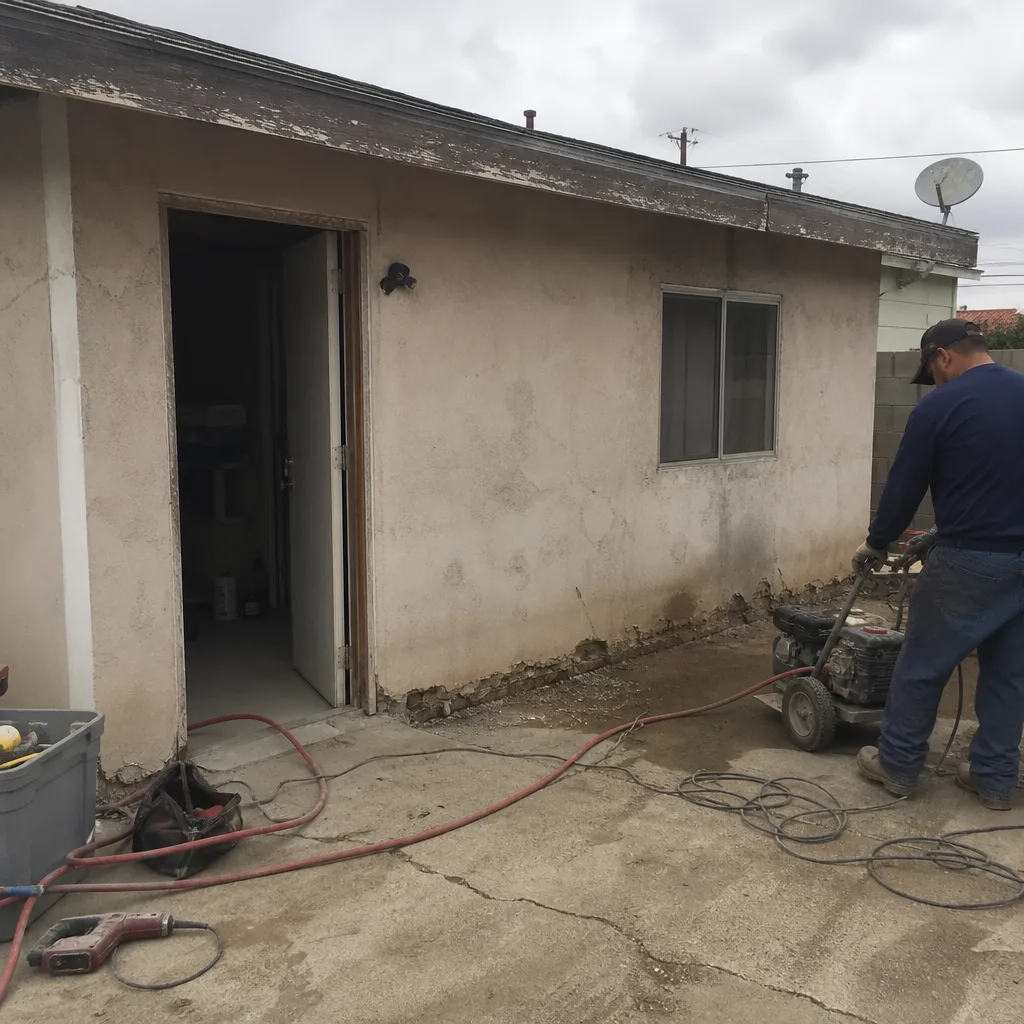 Before
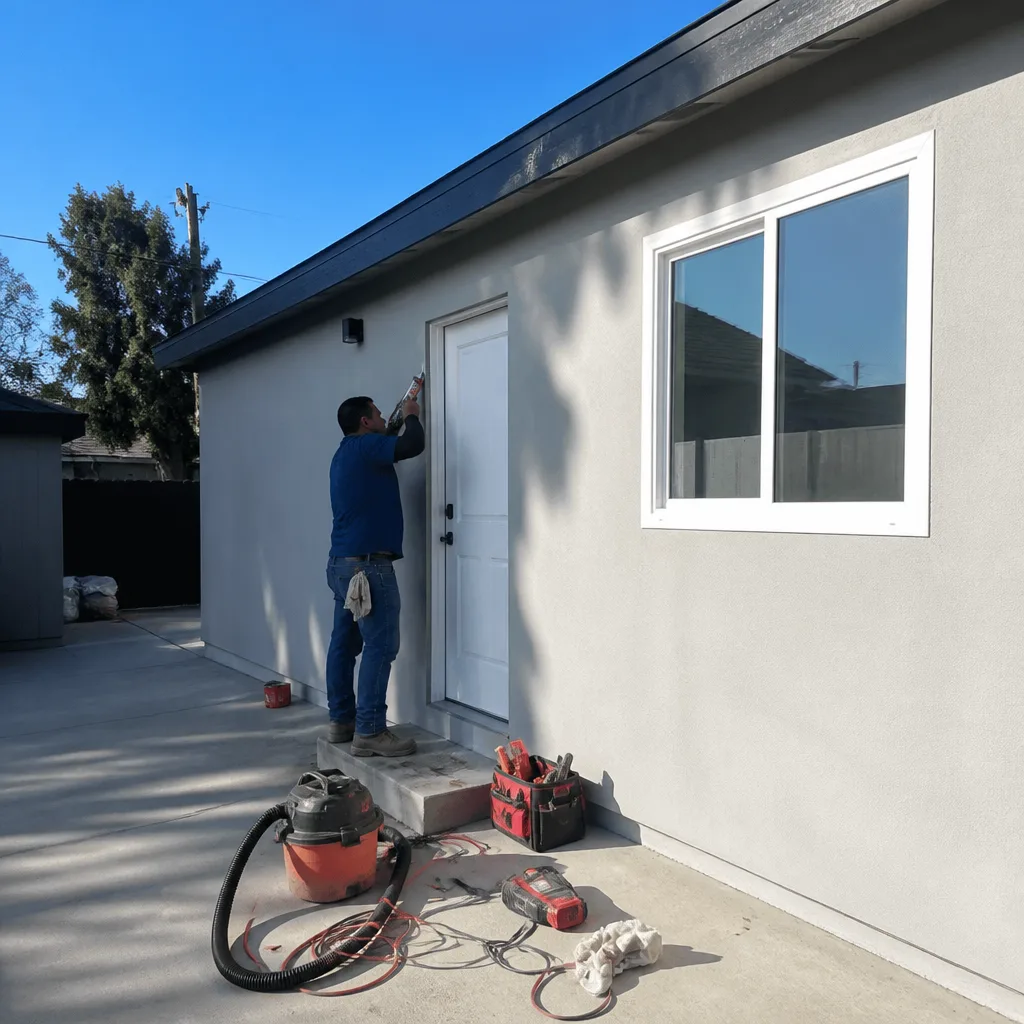 After
AfterWhat California Owner-Builder Law Actually Permits
Business & Professions Code § 7044 allows a homeowner to act as their own general contractor on a single-family residence, including an ADU, provided they live in or intend to live in the primary dwelling. The exemption from contractor licensing applies only to the construction management role. It does not exempt you from any building code, zoning ordinance, or permit requirement. Rialto Building & Safety applies the 2022 California Building Code, the 2022 California Residential Code, and San Bernardino County amendments identically to owner-builder and professional submissions.
Here’s what the law actually says you can and cannot do:
- You may pull the building permit in your own name, serve as your own general contractor, and hire licensed subcontractors for trade work.
- You may not perform electrical, plumbing, or HVAC work yourself unless you hold the appropriate CSLB license (C-10, C-36, or C-20). Rialto requires licensed subcontractors for all MEP rough-in and final connections.
- You may not sell the property within five years without disclosing the owner-builder status on the natural hazard disclosure statement. This is not a suggestion; it’s a statutory requirement under § 7044 that exposes you to buyer recourse if undisclosed.
- You must carry workers’ compensation insurance for any employees, or verify that your subcontractors carry their own. Homeowner’s insurance typically excludes construction-related injury claims.
The owner-builder exemption was designed in 1953 for rural landowners building their own homes. Applied to a 2026 ADU in Rialto’s developed neighborhoods, it creates a documentation and liability structure that most homeowners underestimate by half.
In our work across Rialto’s neighborhoods from El Rancho Verde to the newer infill near the 210 corridor, we’ve reviewed owner-builder permit sets that took 14 months to produce and still failed plan check for missing structural calculations. The law permits the attempt. It does not guarantee the outcome.
The Permit Set Rialto Plan Check Demands
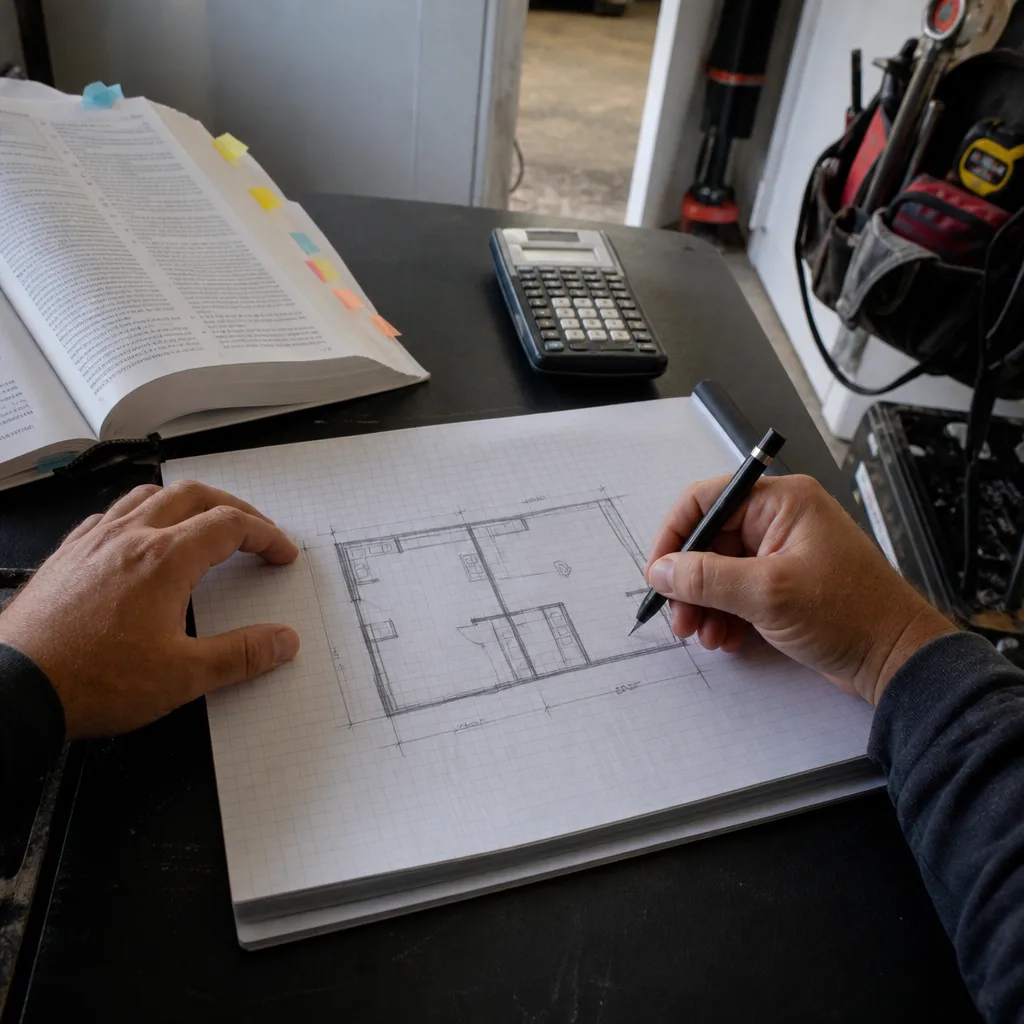
Rialto Building & Safety requires a complete permit set before plan check begins. There is no “phased” submission for owner-builders. The set must include:
- Site plan showing property lines, existing and proposed structures, setbacks, easements, and utility locations. Rialto’s zoning requires 4-foot side and rear setbacks for detached ADUs; corner lots have additional frontage requirements that vary by specific tract.
- Floor plan, elevations, and cross-sections at 1/4″ scale minimum, showing all dimensions, ceiling heights (minimum 7’6″ per Rialto amendment), door and window sizes, and fire-rated assemblies where required within 5 feet of property lines.
- Structural calculations with engineer stamp for foundation, floor, wall, and roof systems. Rialto sits on a mix of alluvial soils and compacted fill; the geotechnical report must address liquefaction potential for structures over 600 sq ft or with habitable basements.
- Title 24 energy compliance documentation (CF-1R forms) showing prescriptive or performance compliance for envelope, mechanical, and water heating systems. Rialto enforces the 2022 Energy Code without local amendments, but the documentation must be prepared by a certified energy analyst.
- MEP schematics with load calculations, panel schedules, fixture counts, and ventilation rates. For ADUs over 500 sq ft, Rialto requires mechanical ventilation per ASHRAE 62.2.
- Fire sprinkler plan if the primary residence is sprinklered, or if the ADU exceeds 1,200 sq ft. Most Rialto homes built after 2010 have NFPA 13D systems.
- Water meter and sewer connection details, including capacity letters from Rialto Public Utilities if the existing service is undersized.
Each of these documents must be current, coordinated, and cross-referenced. A common owner-builder failure: the structural engineer sizes a beam for a 12-foot span, but the architect’s floor plan shows a 14-foot opening. Plan check catches the conflict and issues a correction notice. The owner-builder must then re-engage both consultants, pay revision fees, and resubmit. We’ve seen this cycle repeat three times on a single permit set.
At ADU Design & Permitting in Rialto, our permit sets are produced in-house by designers who coordinate directly with our structural engineers and Title 24 consultants. The drawings that reach Rialto’s counter have already been cross-checked for conflicts. That’s the difference between a permit set and a collection of individual consultant outputs.
Where DIY Saves Real Money (and Where It Doesn’t)
Not all ADU work carries equal financial risk. Some tasks are genuinely cost-effective for skilled homeowners; others expose you to permit revocation, insurance voidance, or structural failure. Here’s the breakdown based on our project history in Rialto and San Bernardino County:
Tasks Where DIY Saves Real Money
- Finish carpentry (baseboard, door casing, shelving): Material cost only, $800-$2,400 depending on trim level. No permit implications if installed after final inspection.
- Interior painting: $1,200-$3,000 in labor savings for a 600 sq ft unit. Use zero-VOC products to avoid re-testing for air quality if Title 24 commissioning is required.
- Landscaping and hardscaping outside the ADU footprint: No permit required for work beyond setbacks. Rialto’s clay-heavy soils in the older neighborhoods near downtown make drainage planning worthwhile; surface grading errors can redirect water toward foundations.
- Fixture and appliance installation after final inspection: Faucets, light fixtures, cabinet hardware. These are cosmetic and non-structural.
Tasks Where Unlicensed Work Voids Permits and Insurance
- Electrical panel upgrades or subpanel installation: Must be performed by a C-10 licensed electrician and inspected at rough-in and final. Unpermitted electrical work voids most homeowner’s policies and creates fire liability that persists through resale.
- Plumbing rough-in and gas line extensions: C-36 license required. Rialto requires pressure testing at 1.5x working pressure for 15 minutes; this is not a homeowner-friendly procedure.
- Structural modifications including beam installation, shear-wall nailing patterns, and hold-down anchoring: These require the structural engineer’s inspection sign-off. Owner-performed structural work that fails inspection must be removed and redone at full cost.
- Foundation work including excavation, rebar placement, and concrete pour: Rialto requires a pre-pour inspection for all habitable foundations. Miss the inspection window, and you may be required to expose rebar for visual verification.
The pattern is clear: DIY saves money on surfaces, not on systems. Systems carry life-safety implications, and California’s codes treat them accordingly. The $2,400 you might save painting your own ADU can be erased by a single failed electrical inspection that delays your certificate of occupancy by six weeks.
The Hybrid Model: Owner as General Contractor
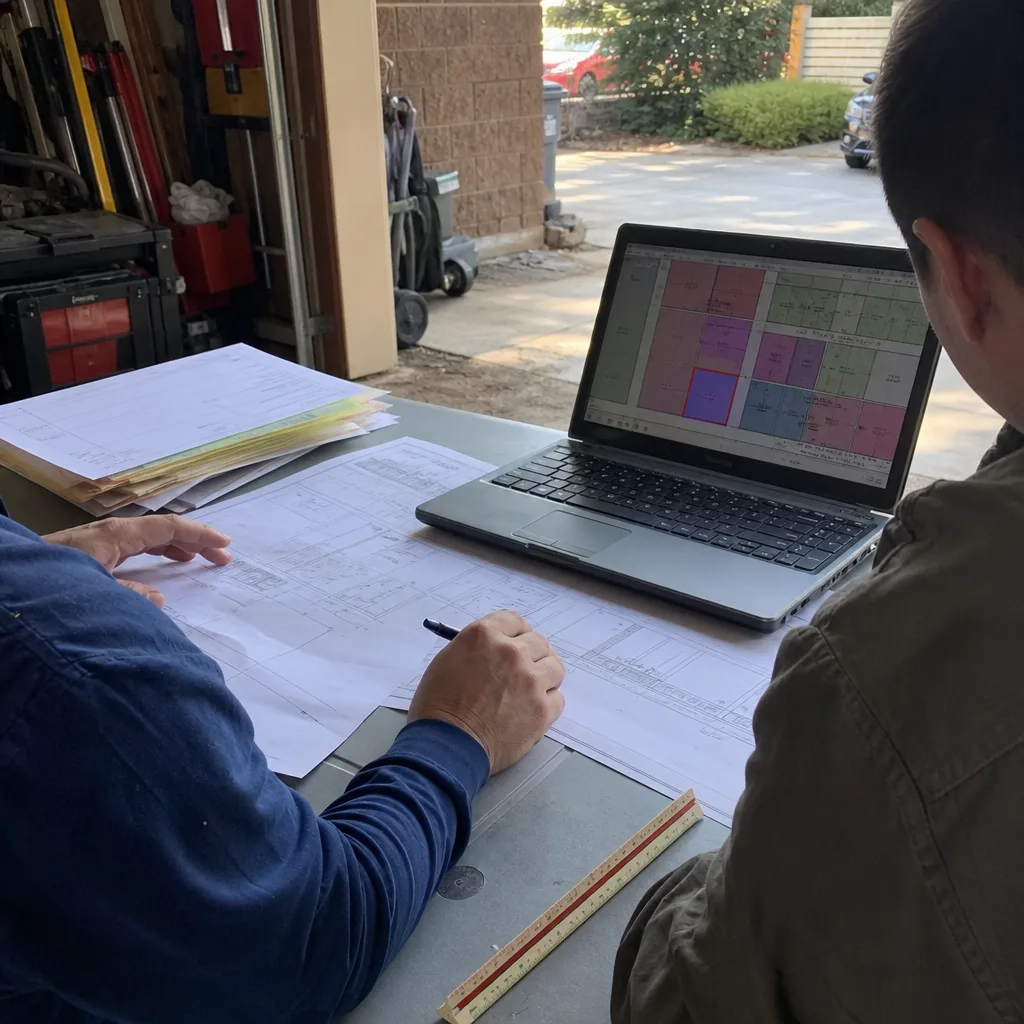
The most common middle path in Rialto is not pure DIY but hybrid delivery: the homeowner serves as general contractor, hires licensed subcontractors for all trade work, and self-performs finish tasks. This model appears to split the difference. In practice, it introduces a specific set of costs and risks that the pure DIY guides and more guides & resources rarely quantify.
The Actual Cost Savings
A typical design-build general contractor fee in the Inland Empire runs 15-22% of hard construction costs. On a $180,000 detached ADU, that’s $27,000-$39,600. By self-managing, you retain this margin. But you also assume the following costs that are typically embedded in the general contractor’s price:
- Builder’s risk insurance: $1,200-$2,800 for a 6-month construction period. Your homeowner’s policy will not cover construction-phase losses.
- Subcontractor bond verification: Required for any sub with contract value over $500. Rialto Building & Safety may request bond certificates at permit issuance.
- Dumpster, portable toilet, and temporary power: $800-$1,500 for a typical Rialto project duration.
- Plan check revision fees: $380 per resubmission after the first correction notice. Owner-managed projects average 2.3 resubmissions in our observation, versus 0.4 for professional permit sets.
The Scheduling Overhead
General contractors maintain relationships that compress schedules. Their electrician answers the phone because there’s a pipeline of future work. As an owner-builder, you’re a single job. Subcontractors in Rialto’s busy market will fit you between their contractor clients. A typical hybrid ADU in our area takes 8-14 months from permit to occupancy, versus 5-8 months under professional management. If you’re financing construction with a draw loan, every month of delay adds interest carrying cost that the general contractor fee would have covered.
The Liability Exposure
When a subcontractor’s work fails inspection, the general contractor typically bears the cost of coordination and rework. As owner-builder, that subcontractor’s contract is with you. If the plumber’s rough-in fails pressure test and the plumber disputes whether the failure was in their work or in your specified materials, you are the party in conflict. We’ve been called into three Rialto projects where this exact dispute had stalled construction for 90-plus days.
The hybrid model works for homeowners with construction management experience, flexible schedules, and capital reserves for the disputes that arise. It is not a cost-free middle ground.
True Cost Comparison: 600 Sq Ft Detached ADU in Rialto
The most honest comparison values the owner’s time. Here’s a line-item breakdown for a typical 600 sq ft detached ADU in Rialto’s 92376 or 92377 zip codes, built to permit and passing final inspection:
| Cost Category | Professional Design-Build (Ellery ADU Studio) | Owner-Builder Hybrid |
|---|---|---|
| Permit set and engineering | Included in contract | $8,500-$14,000 |
| Plan check and permit fees (Rialto) | $4,200-$5,800 | $4,200-$5,800 |
| Foundation and slab | $18,000-$24,000 | $16,500-$22,000 (self-managed sub) |
| Framing and structural | $28,000-$36,000 | $25,000-$32,000 |
| MEP rough-in and final | $22,000-$29,000 | $19,500-$26,000 |
| Exterior envelope (siding, roofing, windows) | $24,000-$32,000 | $21,000-$28,000 |
| Interior finishes | $18,000-$26,000 | $14,000-$20,000 (DIY paint, trim) |
| Site work and utilities | $12,000-$18,000 | $10,500-$16,000 |
| General contractor fee | Included | $0 (self-performed) |
| Owner’s time: 200 hours at $45/hr* | N/A | $9,000 |
| Builder’s risk, misc. direct costs | Included | $2,500-$4,500 |
| Total Range | $126,200-$170,800 | $130,200-$169,300 |
*$45/hr represents half the median household income rate in Rialto’s demographic profile; adjust to your own opportunity cost.
The ranges overlap. At the low end, owner-builder can save 8-12% if everything proceeds on schedule with no revision cycles or subcontractor disputes. At the high end, professional delivery costs the same or less because the embedded efficiency in scheduling, permit coordination, and rework avoidance offsets the contractor fee.
Under Haven Standard Clause 1, Ellery ADU Studio Rialto home provides a written price before any work starts. The owner-builder path cannot offer equivalent price certainty because it depends on variables (permit revision count, subcontractor availability, weather delays) that emerge during the project.
The Five-Year Resale Disclosure Most DIY Guides Omit
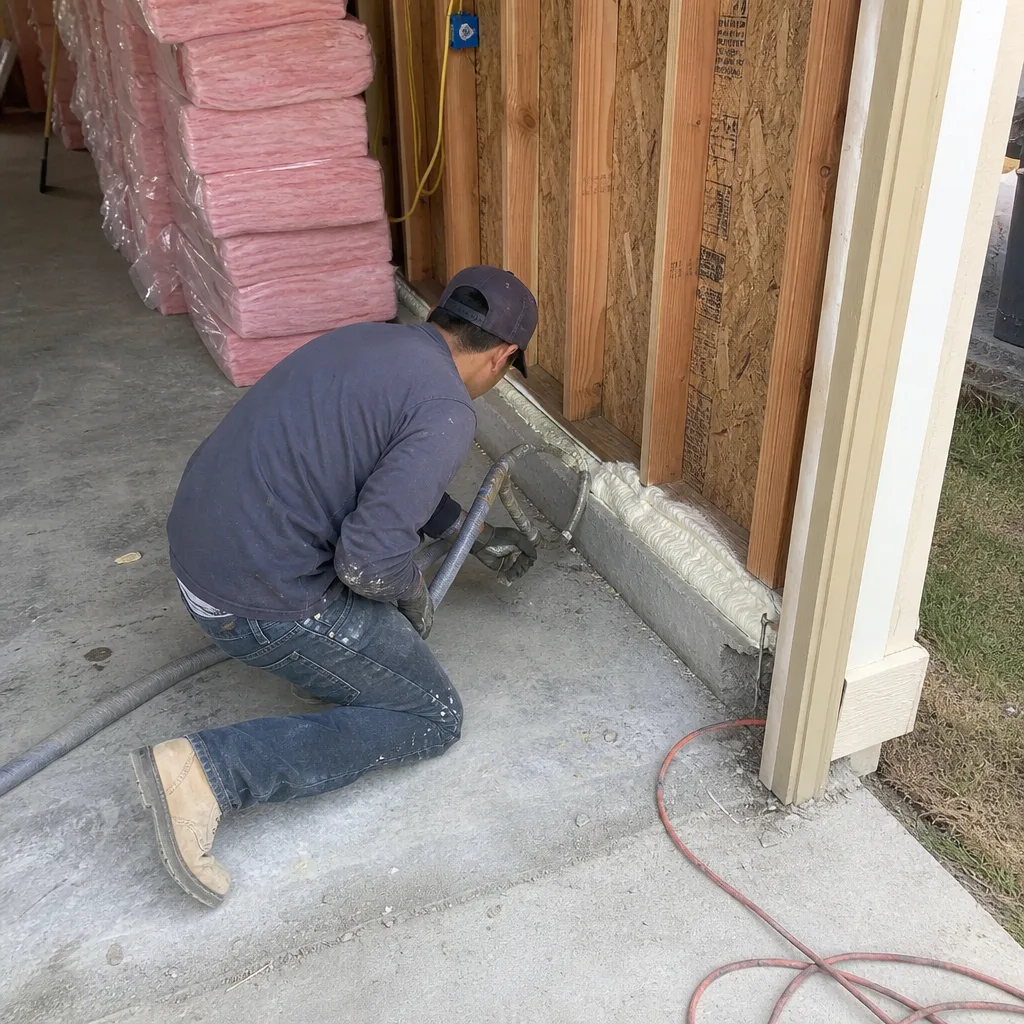
Business & Professions Code § 7044 requires owner-builders to disclose their status on the Natural Hazard Disclosure Statement for five years from the date of final inspection. This is not a footnote. It is a material fact that affects buyer financing, insurance, and negotiating position.
Here’s what the disclosure triggers:
- Buyer financing complications: Some lenders require additional inspection or warranty coverage for owner-builder construction, particularly for electrical and plumbing systems.
- Insurance underwriting: Homeowner’s insurers may request copies of all permits and inspection sign-offs before binding coverage. Missing documentation from a 2026 project in 2031 can be difficult to reconstruct.
- Negotiating leverage: Buyers and their agents use the owner-builder disclosure to justify lower offers, typically 2-5% below comparable professionally built ADUs in Rialto’s market.
- Liability persistence: The statute of limitations for construction defect claims in California is 10 years for latent defects. Owner-builder liability does not transfer with sale; it follows the original permit holder.
The five-year clock starts at final inspection, not at permit issuance. If your owner-builder ADU takes 18 months to complete and you sell in year four, the disclosure requirement still applies. Professional construction carries no equivalent resale stigma because the licensed contractor’s work is bonded and subject to CSLB complaint procedures that buyers recognize as standard consumer protections.
For homeowners building an ADU as a long-term rental asset in Rialto’s stable market, this may be acceptable. For those planning to sell within five to seven years, the disclosure requirement erodes the equity gain that justified the ADU investment.
Common Mistakes to Avoid
- Starting construction before plan check approval: Rialto issues stop-work orders with escalating penalties. The foundation you poured “to get ahead of weather” becomes uninspectable and must be removed.
- Using online plan templates without local engineering review: A site plan drawn for Sacramento’s seismic zone will fail Rialto’s structural review. Soil conditions, wind exposure, and snow load assumptions vary by jurisdiction.
- Neglecting the Rialto Public Utilities capacity letter: Water and sewer service sizing must be verified before permit issuance. We’ve seen projects delayed 10 weeks because the owner-builder assumed existing service was adequate.
- Hiring unlicensed handymen for MEP work: Rialto inspectors require CSLB license verification at rough-in. Unlicensed work is red-tagged and must be removed before licensed replacement can begin.
- Underestimating Title 24 documentation: The CF-1R forms are not a DIY project. Software compliance tools cost $800-$1,500 annually, and the learning curve is substantial. Rialto plan check rejects incomplete energy documentation without review of other elements.
- Failing to document every inspection: Owner-builders must maintain their own inspection records. Rialto’s online system shows pass/fail status but not corrective notes. Without your own documentation, reconstructing a five-year-old inspection history for resale disclosure is nearly impossible.
When to Call a Professional
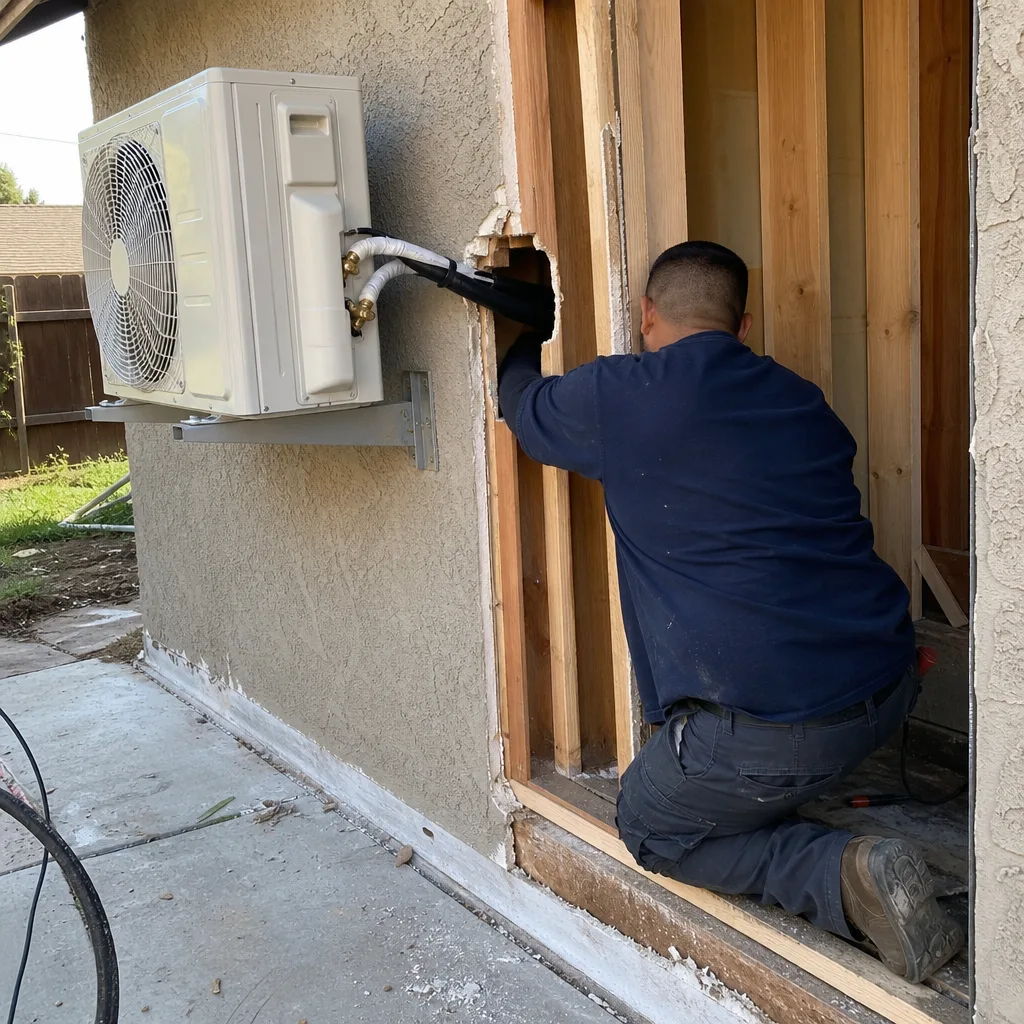
Call a professional when the cost of your own time, the risk of permit failure, or the liability exposure exceeds your tolerance for any of the three. Specific scenarios: your day job pays $60,000 or more annually (making 200 hours of uncompensated project management a significant opportunity cost); you plan to sell within seven years; your property has complicating factors like a zero-lot-line condition, hillside grading, or utility capacity constraints; or you’ve already received a correction notice from Rialto Building & Safety and the revision scope is unclear.
Ellery ADU Studio Rialto offers free estimates in Rialto. We also provide a Free Second Opinion on any written estimate already in hand, including owner-builder cost projections. Call (951) 476-1467 to schedule. Our permit sets, construction documentation, and 365-Day Done Right Promise are governed by The Haven Standard, with a written price before any work starts under Clause 1.
Frequently Asked Questions
A professionally built 600 sq ft detached ADU in Rialto typically ranges from $126,000 to $170,800 all-in, including permit set, engineering, construction, and final inspection, as detailed in our ADU Cost Breakdown: The Rialto Homeowner’s Reference for 2026. Owner-builder projects overlap this range at $130,000 to $169,300 once owner’s time and direct costs are included. Call (951) 476-1467 for a written price on your specific site - estimates are free.
Yes, under California Business & Professions Code § 7044, if you live in or intend to live in the primary residence. You must still produce the same permit set, engineering stamps, and code compliance as a licensed professional, and you cannot perform electrical, plumbing, or HVAC work without the appropriate trade license.
Under The Haven Standard Clause 5 (No Surprises), Ellery ADU Studio locks the scope and price at contract signing. No door-side upsells, no scope creep. Owner-builder projects have no equivalent protection; material price fluctuations and subcontractor change orders are borne entirely by the homeowner.
Rialto requires geotechnical evaluation for structures over 600 sq ft or with habitable basements, and may require it for sites with visible slope, fill, or drainage issues. The alluvial soils in Rialto’s older neighborhoods near the Santa Ana River channel can have variable bearing capacity, a factor covered in our Seasonal ADU Care for Rialto: Year-Round Homeowner’s Guide. A geotechnical report runs $2,200-$3,800 and is typically included in professional design-build pricing.
Plan check for a complete permit set in Rialto averages 4-6 weeks for professional submissions with no corrections. Owner-builder sets average 8-14 weeks including revision cycles. California’s SB 9 and SB 10 streamlined certain housing types, but ADUs still require full plan check for structural and energy compliance.
Yes, but the modular unit still requires site-specific foundation design, utility connection plans, and Rialto Building & Safety approval of the manufacturer’s state approval (SBCCI or equivalent). Ellery ADU Studio specifies and coordinates prefab systems from brands including Abodu, Cover, and Tuff Shed within our single-contract model, handling manufacturer liaison and local compliance as one scope. Owner-builders must manage this coordination themselves or pay the manufacturer’s project management fee, which typically runs 8-12% of unit cost.
The inspector issues a correction notice listing specific code violations. You must correct the work and request re-inspection. Each re-inspection carries a fee, and repeated failures can trigger a full plan review or stop-work order. Failed structural or MEP inspections may require removal of finished surfaces to access the deficiency. Professional contractors carry rework insurance and maintain relationships with inspectors that help resolve ambiguities before they become formal failures.
The Bottom Line
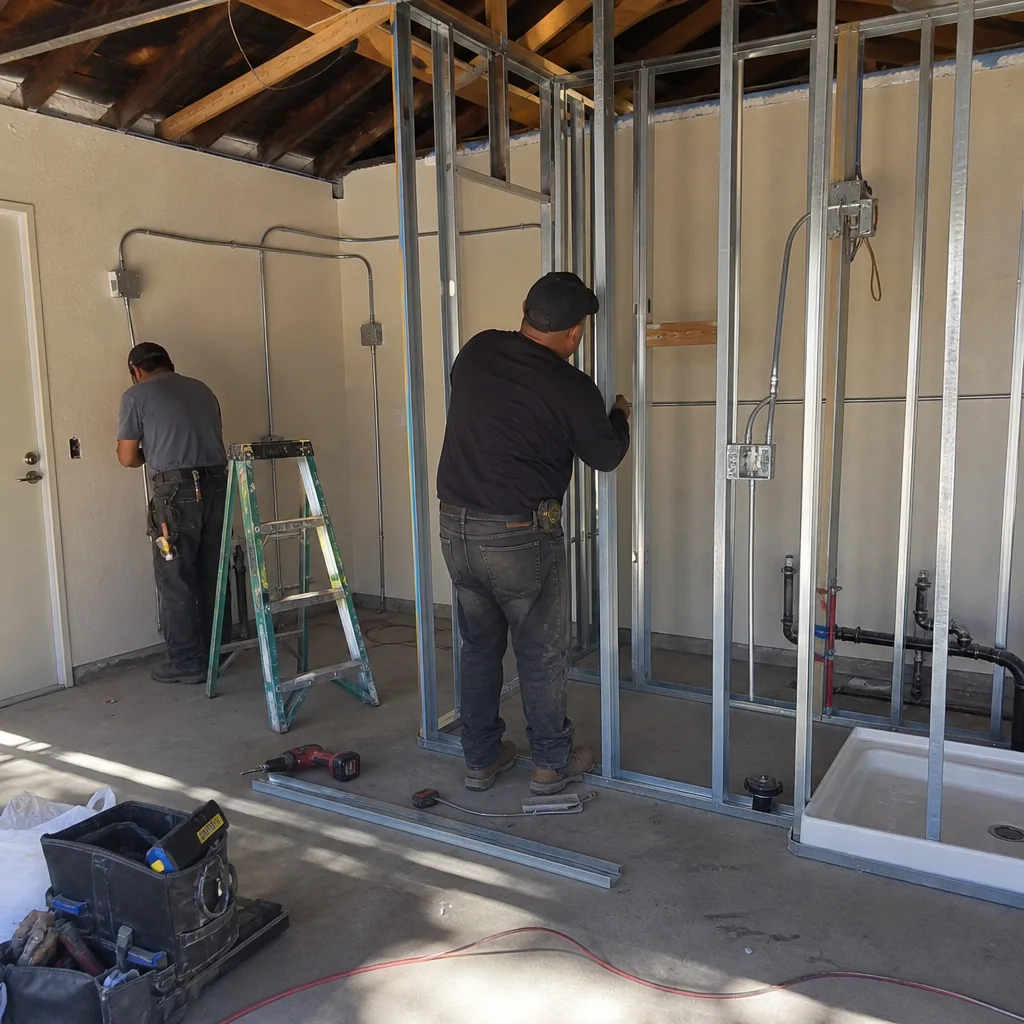
The DIY-versus-professional question for Rialto ADUs is not primarily about construction skill. It is about documentation, liability, and time valuation. California’s owner-builder law permits the path but does not reduce its requirements. The permit set, engineering stamps, energy compliance, and inspection sequence are identical whether your name or a contractor’s is on the application. The real variables are your available hours, your tolerance for permit revision cycles, your five-year resale plans, and whether the 8-15% apparent savings survives contact with the actual costs of self-management. For homeowners who value price certainty, documented compliance, and a single point of accountability, professional design-build delivery is not an expense to avoid but a risk to price. At Ellery ADU Studio Rialto, that price is written before work starts, backed by The Haven Standard, and available by calling (951) 476-1467.
Written by Nadia Ellery, Owner at Ellery ADU Studio Rialto, serving Rialto since 2015.