
James Hardie Site Prep & Utilities: The Rialto Owner’s Guide
We stock and install James Hardie-compatible site prep and utility components for ADU projects in Rialto, with most replacement and upgrade work priced between $2,800 and $7,500 installed, depending on scope and existing infrastructure condition. Most standard utility tie-ins and site prep packages are available same-week once we complete a site walk and confirm your Hardie system specifications. Homeowners usually discover an issue when their James Hardie siding or trim installation crew arrives and finds the substrate uneven, the WRB (weather-resistant barrier) compromised, or the utility rough-ins don’t match the panel layout - turning a scheduled siding day into a two-week delay while the prep gets sorted.
Which James Hardie Models This Applies To
James Hardie site prep and utilities work covers three distinct system categories: HardiePlank lap siding, HardiePanel vertical siding, and HardieTrim boards. Each requires specific substrate preparation. HardiePlank demands a flat, continuous sheathing surface with maximum 1/8-inch variation in 10 feet - anything more telegraphs through the 5/16-inch fiber-cement boards. HardiePanel, common on modern detached ADUs in Rialto’s newer developments near the 210 corridor, needs structural sheathing rated for the fastener pattern; OSB won’t cut it if the nailing schedule calls for plywood or equivalent. HardieTrim around windows and doors requires blocking at every fastening point, which means your rough opening prep has to be right before the trim crew shows.
We specify OEM James Hardie components where the warranty depends on it - their HZ10 formula for our Inland Empire climate zone, specifically. For utility rough-ins and standard flashing, we use quality aftermarket equivalents that meet the same ASTM C1186 standard but don’t carry the James Hardie brand markup. The compatibility gotcha most owners miss: Hardie’s ColorPlus prefinished siding requires a specific gap at butt joints (1/8 inch minimum) that your site prep has to accommodate from the start. If your framer set studs at exact 8-foot centers without that allowance, your siding crew is cutting every board on site.
Signs Your James Hardie Site Prep & Utilities Is Failing
- Visible waviness or “oil canning” in installed siding. This usually means the substrate wasn’t flattened during prep, or the WRB was applied over uneven sheathing. In Rialto’s heat, that distortion worsens as boards expand and contract against a wavy wall.
- Water staining at window or door heads, even with intact caulk. The likely cause is missing or improperly lapped flashing tape during the rough-prep phase. Hardie’s installation requirements specify peel-and-stick flashing at all penetrations; skipping it voids the warranty and rots your framing.
- Siding boards cracking at fasteners within the first two years. This points to over-driven fasteners during installation, often because the prep crew didn’t mark stud locations clearly or the sheathing wasn’t dense enough for the specified nail schedule.
- Utility shutoff locations that conflict with planned panel layout. We see this in Rialto garage conversions where the original electrical meter or gas riser was positioned for a stucco wall, but the Hardie panel dimensions require a different fastening and cutting pattern.
- Efflorescence or white powder on the siding surface. This indicates moisture migrating through improperly sealed substrate joints. The site prep failed to seal sheathing seams or install the required vapor-permeable WRB behind the siding.
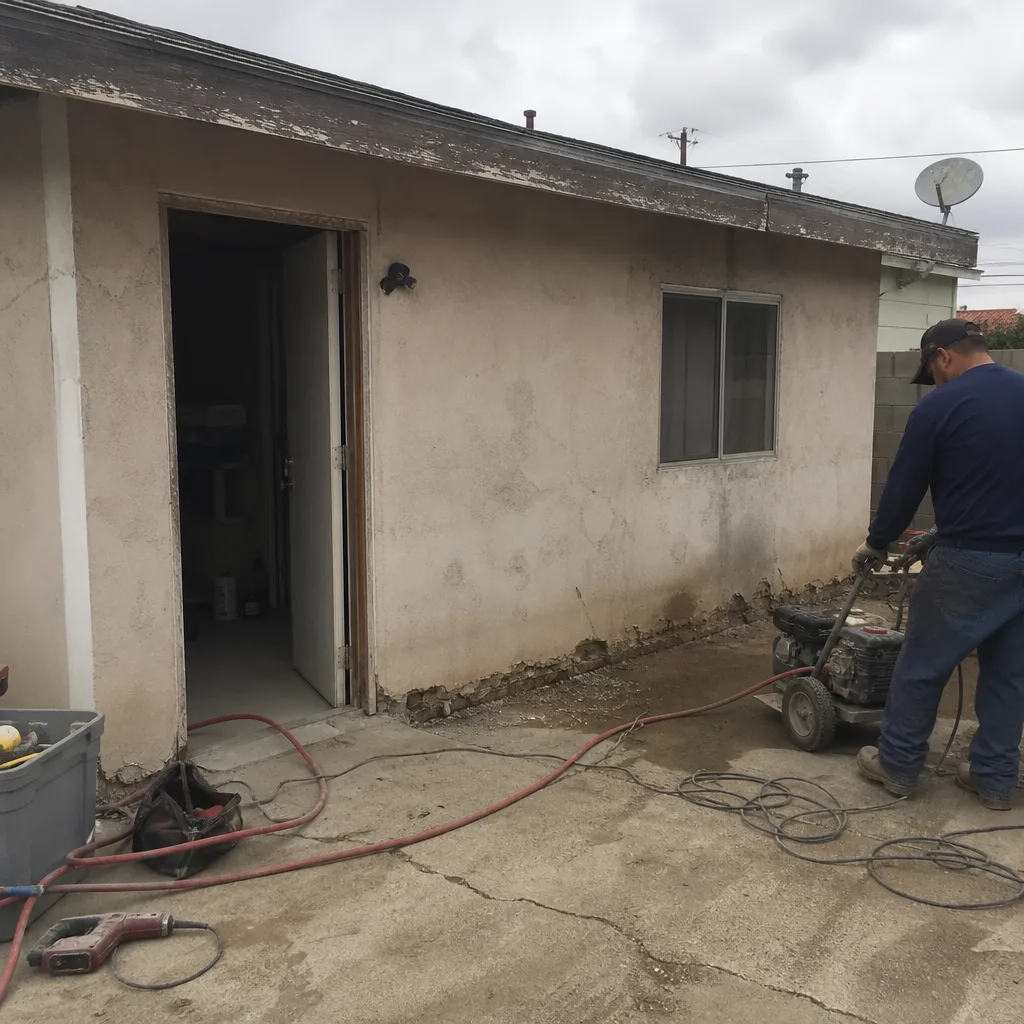 Before
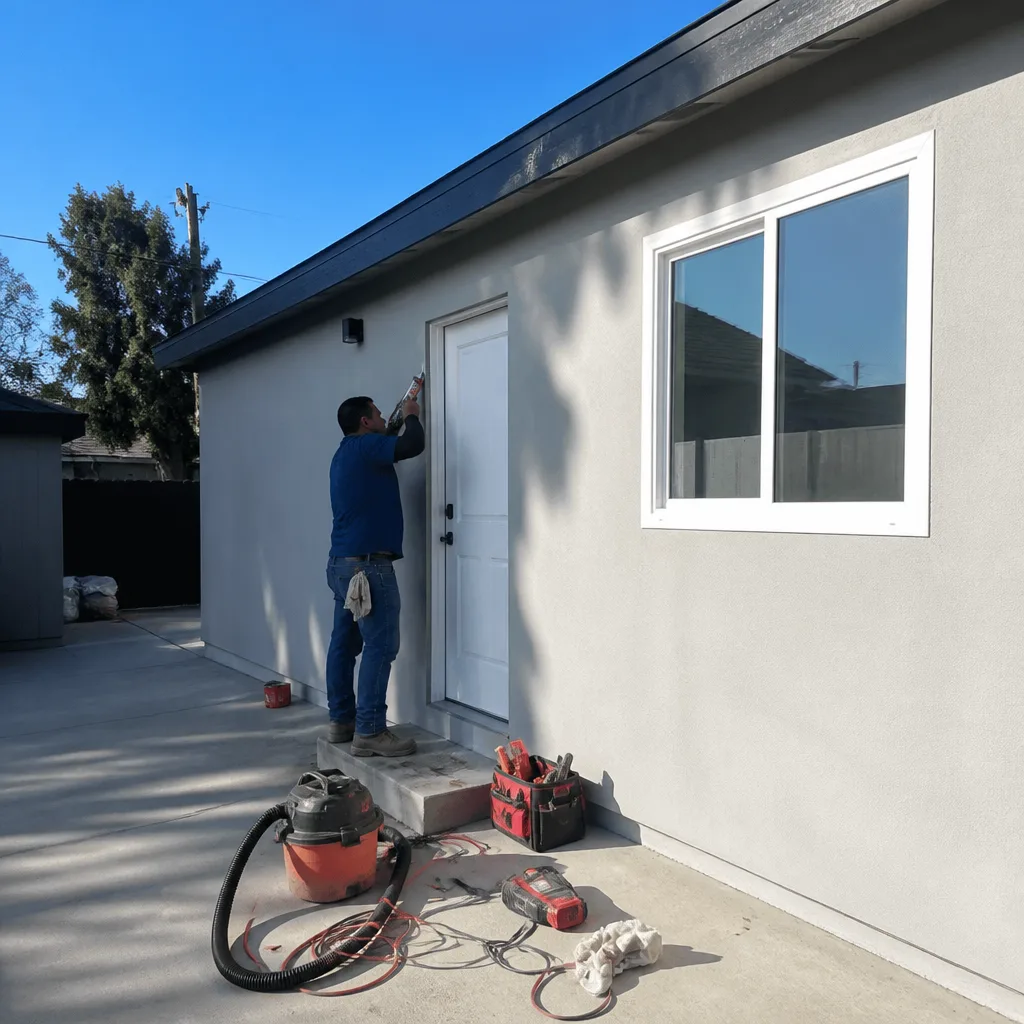 After
AfterReplacement Cost & What’s Included
In Rialto, James Hardie site prep and utility correction work typically runs $2,800-$7,500 installed, with most single-component fixes falling in the $3,200-$4,800 range. A full substrate replacement with new WRB, flashing, and utility relocation for a standard 400-square-foot ADU wall assembly lands at the higher end. What drives the range: accessibility (scaffolding vs. ground work), existing damage extent, and whether permits are required for utility relocation - Rialto City Building & Safety requires permits for any electrical or gas line modification, which we pull and schedule inspection for as part of our scope.
Every project under The Haven Standard, Clause 1, receives a written price before work starts - no open-ended time-and-materials agreements. Our site prep and utilities package includes parts, labor, permit fees where applicable, and a documented photo record of the substrate condition before and after. The 365-Day Done Right Promise covers our workmanship; James Hardie’s material warranty runs 30 years on siding and 15 years on ColorPlus finish, provided installation follows their published requirements - which our prep work ensures.
DIY or Call Us?
An owner can safely check a few things: confirm your James Hardie product code matches your climate zone (HZ10 for Rialto), verify the substrate is plywood or equivalent OSB rated for exterior use, and look for intact housewrap with taped seams. What you should not attempt: substrate leveling on walls over 8 feet, electrical or gas utility relocation, or flashing installation at roof-wall intersections. These affect structural integrity, fire safety, and code compliance - Rialto inspectors will red-tag work that doesn’t meet the California Residential Code, Chapter 7A for wildland-urban interface zones.
The paperwork is the project. Everything else is just construction. If your Hardie crew is waiting and the prep isn’t right, call (951) 476-1467. We’ll walk the site, photograph what we find, and give you a written scope and price before any work begins.
FAQs
Properly installed substrate and WRB behind James Hardie siding should last 25-30 years in Rialto’s inland climate, though the intense summer heat and Santa Ana wind cycles can accelerate fastener corrosion if the wrong grade was used. We specify hot-dip galvanized or stainless fasteners for every Rialto project, per Hardie’s coastal/inland requirements. Call (951) 476-1467 for an exact quote on your specific assembly - estimates are free.
Localized repair is possible if the damage is confined to one wall section and the WRB beneath is still intact and properly lapped; we cut back to the nearest stud, replace sheathing and barrier, and integrate new flashing. If moisture has penetrated multiple layers or mold is present, full replacement of the affected assembly is the only code-compliant path. We document both options with photos and a written price for each before you decide.
Most single-wall corrections take 2-3 working days once materials are on site; full ADU envelope prep with utility relocation runs 5-8 days, plus inspection scheduling. Rialto Building & Safety typically inspects within 48 hours of request for ADU-related work. We coordinate our schedule with inspection availability so your Hardie siding crew isn’t waiting.
We stock standard Hardie-compatible WRB, flashing tapes, fasteners, and blocking lumber on our Rialto-area trucks; specialized components like fire-rated sheathing for WUI zones or custom utility relocation kits order in 3-5 business days. When Nadia Ellery reviews your permit set during the site walk, she flags any long-lead items immediately so they don’t hold up your siding installation.
Written by Nadia Ellery, Principal, Ellery ADU Studio Rialto at Ellery ADU Studio Rialto, serving Rialto and nearby areas.